
Separate verified venue details from unconfirmed claims
Opening status and machine availability vary by venue, so broad listings and general gambling rules cannot confirm current local conditions.
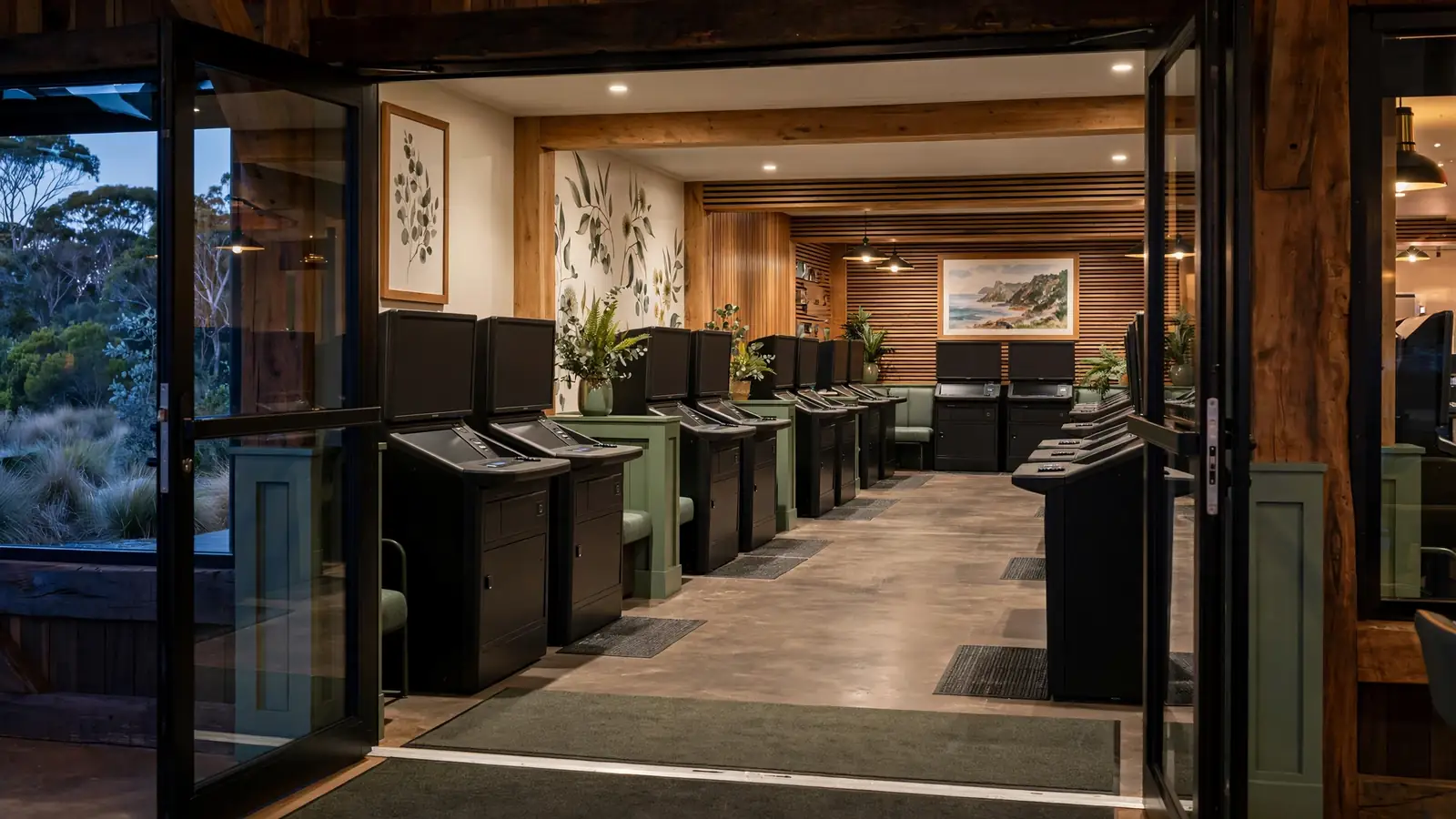
Pokies Opening in Tasmania: What the Available Evidence Can Establish
Whether pokies are open in Tasmania is a venue-level question, not something that can be answered from general gambling rules alone. A statement about a particular place being open now would require current information about that venue and the operating status of its gaming area.
The word “open” can also refer to different things. A building may admit patrons while its gaming area is closed; machines may operate only during part of a venue’s trading period; or access may depend on circumstances at the time. The same applies to claims that machines are available early, late or continuously.
Opening hours are not established simply by identifying a town, a venue category or the fact that gambling occurs in Australia. Conditions at one venue would not demonstrate the schedule at another, and an old listing would not establish present operating status. A time shown in a directory, promotional page or archived notice can also become outdated. For a reliable current answer, the relevant detail would need to be tied to a specific venue and checked against information that is current and clearly refers to its gaming area.
Casinos listed by licence
For readers in Tasmania exploring online pokies in 2026, this list offers a starting point for checking operators and the details available about them. Review the stated licensing, deposit and payout information before deciding where to play.
-
Roby Casino
- License
- Curacao eGaming (Roby Games Ltd)
Roby Casino is listed with a Curacao eGaming licence held by Roby Games Ltd.
-
Neospin
- License
- Curacao Gaming Control Board OGL/2023/176/0095 (Hollycorn N.V.)
Neospin is listed under Curacao Gaming Control Board licence OGL/2023/176/0095, held by Hollycorn N.V.
-
WinSpirit Casino
- License
- Curacao eGaming OGL/2024/923/0383 (Antillephone N.V.)
- Min. deposit
- A$30
WinSpirit Casino is listed with a Curacao eGaming licence, OGL/2024/923/0383, issued by Antillephone N.V. Its minimum deposit is A$30.
-
Vegaz Casino
- License
- Curacao OGL/2024/1335/0780
- Min. deposit
- EUR 20
Vegaz Casino is listed with Curacao licence OGL/2024/1335/0780. Its stated minimum deposit is EUR 20.
-
House of Pokies
- License
- international iGaming licence – jurisdiction not named in the source
- Payout speed
- PayID 1-24 hours
- Min. deposit
- A$30 (PayID from A$10)
House of Pokies lists an international iGaming licence, though the source does not name the jurisdiction. PayID payouts are stated as taking 1–24 hours; the minimum deposit is A$30, or A$10 via PayID.
-
DragonSlots Casino
- License
- Curacao Gaming Authority (Jumpman Gaming Ltd)
DragonSlots Casino is listed under the Curacao Gaming Authority, with Jumpman Gaming Ltd named in connection with its licence.
-
Ricky Casino
- Payout speed
- crypto under 1 hour, PayID 1-3 business days
- Min. deposit
- A$20 (A$30 to qualify for the bonus)
Ricky Casino states that crypto payouts take under an hour and PayID payouts take 1–3 business days. The minimum deposit is A$20, or A$30 to qualify for the bonus.
-
Wild Tokyo
- License
- Curacao
- Payout speed
- crypto 30-60 minutes, fiat 1-5 days
- Min. deposit
- A$10
Wild Tokyo is listed with a Curacao licence. Its stated payout times are 30–60 minutes for crypto and 1–5 days for fiat; the minimum deposit is A$10.
-
Rollero Casino
- License
- Curacao Gaming Control Board OGL/2023/176/0095 (Hollycorn N.V.)
Rollero Casino is listed under Curacao Gaming Control Board licence OGL/2023/176/0095, held by Hollycorn N.V.
-
Lucky Dreams
- License
- Curacao
- Min. deposit
- A$20 (POLi)
Lucky Dreams is listed with a Curacao licence. Its stated minimum deposit is A$20 when using POLi.
This distinction matters for people considering whether to travel. A venue’s general trading hours may not match the hours during which pokies are operating, while a broad claim about Tasmania cannot establish what is happening at a particular location.
The legal age provides a separate, limited point of context: gambling in Australia, including playing pokies online, is restricted to people aged eighteen or over. That rule does not establish whether a Tasmanian venue is open, whether its machines are operating, or what its hours are. Eligibility and availability are different questions.
General information may explain who can legally gamble, but it cannot substitute for a current venue notice. Likewise, a venue’s opening status on one occasion would not prove that the same hours apply on another day. Any statement about present availability should identify the particular place and the period covered rather than treating “Tasmania” as one uniform schedule.
For searches about a named venue, the useful evidence would be a current statement from that venue that specifies gaming-machine operating times, rather than a general opening time for the premises.
The distinction also prevents an unsupported answer from becoming a recommendation. The same caution applies to broad labels such as “open late” or “open early”: they need a defined schedule and a clear indication of whether it refers to the machines or only the venue.
A claim that pokies are open now would need dependable, up-to-date confirmation for the particular gaming area in question.
How Pokie Returns and Randomness Should Be Interpreted
A pokie’s name is not enough to establish how much it may return at a particular venue. The return-to-player figure, or RTP, describes the proportion of stakes a game is designed to return over a very large number of plays. It is a theoretical measure across many outcomes, not a promise about an individual session or a prediction of what a machine will pay next.
A specialist review has reported that some game providers allow casinos to choose among different RTP settings for the same pokie. If that configuration is used, a familiar game could have different theoretical returns in different places. A title appearing in a list of popular games therefore does not, by itself, show the return setting in use at a particular Tasmanian venue. Nor does a game’s reputation establish that its settings are identical wherever it is offered.
This distinction matters when assessing claims about the best-paying pokies in Tasmania. A ranking based only on game names cannot demonstrate that one title has a higher return at a particular venue. To support such a comparison, information would need to identify the specific game configuration and the basis on which its return was measured. Without that detail, labels such as “best paying” express a claim, not a reliable comparison.
RTP is also easy to misread as a short-term expectation. A theoretical return does not mean that a particular player will recover the stated share of their stakes, or that outcomes will even out during one visit. Individual results can differ substantially from a long-run statistical measure. The figure does not predict the result of the next spin, and it cannot establish whether a particular machine will produce a win.
Why previous spins do not predict the next one
Each pokie spin is an independent random event determined by a Random Number Generator. Independence means that previous outcomes do not make a win more or less likely on the next spin. A sequence of losses does not make a win “due”, and a recent win does not indicate that another is imminent. A machine’s visible history, where one is shown, cannot reveal what its next outcome will be.
This remains true when patterns appear compelling. Repeated symbols, near misses or a run of similar results may feel meaningful, but they do not alter the random process governing a later spin. Treating a short sequence as evidence of a machine’s current state confuses observed outcomes with predictive information.
The same principle limits claims that one venue’s machines have recently been paying better than another’s. A small number of reported wins, personal accounts or isolated observations cannot establish a difference in underlying return settings. Even if outcomes are recorded, interpreting them requires enough data and clear information about the machines and configuration being compared. Individual stories can describe what happened in one instance; they cannot demonstrate a stable ranking.
For people comparing pokies in Tasmania, the most defensible distinction is between a game’s title, its configured theoretical return and the random outcomes of individual plays. These are related, but they are not interchangeable. A known title does not reveal its venue-specific setting, and a stated RTP does not forecast a session’s result. Claims that a game is the best option in a city or across the state should therefore be treated cautiously unless they specify what is being compared and provide evidence that supports the comparison.
Airport and CBD Proximity: What Cannot Be Confirmed
A venue described as “near the airport” or “close to the CBD” needs a location that can be checked against a specific reference point. In Tasmania, those descriptions are too broad to identify a particular pokie venue: “the airport” does not name a location, and a CBD must likewise be tied to a particular city. Without a confirmed venue address and a defined point of comparison, a claim of proximity cannot be assessed.
Distance also depends on what “near” means. A venue may be close in a straight line but less accessible by road or on foot. An airport terminal, an airport boundary and a nearby transport stop are different reference points; similarly, a city-centre boundary may not correspond to a particular street or landmark. A useful comparison therefore needs more than a general label: it requires a specific venue, a stated reference point and a consistent way of measuring distance.
This distinction matters for searches about pokies around a Tasmanian airport, in an airport, or near a CBD. Those phrases can refer to different settings. “At an airport” may suggest machines inside a terminal or airport complex, while “near an airport” may mean a separate venue in the surrounding area. Neither wording, by itself, establishes that machines are present at the airport or that a venue operates nearby. The same applies to a request for pokies near a CBD: the phrase does not identify a particular venue or prove that one is within walking distance.
Broad regional descriptions have similar limits. A reference to northern Tasmania does not narrow a location to a specific town, suburb or route. Nor does the phrase “near me” have a stable geographic meaning without a known starting point. It could describe a short walk, a drive across a wider area or simply the nearest venue in a broad region. Those interpretations cannot be treated as interchangeable.
For these reasons, no airport, CBD or northern Tasmanian venue can be named as nearby on the basis of a general location phrase alone. Doing so would risk turning an untested assumption into a practical recommendation. A distance claim should be supported by a confirmed address and a clearly stated measurement; directions require current route information as well. Without those elements, the most that can be said is that the geographic description remains unresolved.
Location is also separate from eligibility to gamble. The legal age for gambling in Australia, including online pokies, is 18. That requirement does not establish that a venue is situated near an airport or city centre, and it does not alter the need for reliable location information.
Airport and CBD labels can make a venue sound easy to find, but they are not substitutes for precise location details. Until a particular place and reference point are established, claims about proximity, walking distance or airport access should be treated as unconfirmed rather than as evidence of a nearby option.
Tasmania Pokies Venues and Responsible-Gambling Requirements
A comparison of pokies venues involves more than the machines or facilities on offer. Responsible-gambling arrangements are also relevant, but general requirements should not be treated as proof that a particular venue in Tasmania has a specific staffing arrangement or procedure. Venue-level claims require evidence tied to that venue.
A report published by regionriverina.com.au described a requirement for venues operating more than 20 gaming machines to have a dedicated responsible gambling officer (RGO) on duty while those machines are running, with the change taking effect from 1 July. The report also described a one-month transition period for venues to remove signage and introduce RGOs. These details should be understood as reported requirements, not as confirmation of the rules applying to every Tasmanian venue. The report alone does not establish which Tasmanian venues meet the machine threshold or how they implement the measure.
The same report described a requirement for venues to maintain a gambling incident register. Such a register is intended to record occurrences, including behaviour suggesting that a patron may be at risk of, or affected by, gambling harm. This is a record-keeping obligation, not a measure of machine performance or a ranking of venues. Its existence would not show that a particular venue has had more or fewer incidents than another, nor would it establish the circumstances behind any recorded event.
For a venue comparison, the distinction between a general rule and an observed practice matters. A requirement may set expectations for staffing or record keeping, but it does not independently verify a venue’s compliance. Conversely, the absence of public detail about a particular measure should not be taken as proof that the venue lacks it. These questions need venue-specific information, rather than an inference drawn from statewide descriptions or from the venue’s size or reputation.
The word “best” also needs a defined meaning. A ranking based on machine outcomes would require reliable, comparable evidence about those outcomes; a ranking based on responsible-gambling safeguards would require evidence about the measures in place and how they operate. The reported RGO and incident-register requirements provide a framework for considering oversight, but do not supply a comparative assessment of Tasmanian venues.
Accordingly, venue descriptions and regulatory reporting serve different purposes. A directory can identify places, while a report on obligations can explain what certain operators are expected to do. Neither, by itself, establishes the quality of a venue’s safeguards. Responsible-gambling arrangements are most accurately described when the applicable rule, its jurisdiction and the evidence about the individual venue are kept separate.
Spirit of Tasmania and Online Casino Searches: The Limits of Verified Information
Questions about pokies aboard the Spirit of Tasmania concern a specific vessel and its onboard facilities. They should be kept separate from questions about land-based Tasmanian venues or online gambling.
The same distinction matters when a search combines Tasmania with the name Crown. A place name or casino brand in a search does not establish that a particular venue operates in Tasmania, or that it has pokies.
Online casino services and Australian law
Online searches for real-money pokies, including offers described as “no deposit”, raise a different issue. Under the Interactive Gambling Act 2001, companies may not provide real-money online pokies to people in Australia without a domestic licence. No such licences have been issued, and there is no Australian-licensed online casino. An offer’s wording does not change that licensing position or establish that a service is authorised in Australia.
This legal position also distinguishes the operator’s conduct from the player’s position. The law targets companies providing the prohibited service; it does not make an individual player liable merely for using an offshore casino. That distinction is not evidence that an offshore service is authorised, dependable or protected by Australian consumer safeguards. If an offshore casino refuses to pay winnings, Australian players have no legal recourse in Australia to recover them through the protections available for a locally licensed casino.
Terms such as “no deposit” describe a promotion, not a guarantee of access, a right to withdraw winnings or an indication of domestic licensing. The central question is not whether an offer appears in a search result, but whether the service is legally authorised to provide real-money online casino games in Australia. In this market, no Australian online casino licence exists.
Accordingly, claims about pokies aboard the Spirit of Tasmania and claims about online casino services should not be treated as interchangeable. The former requires evidence about the vessel itself; the latter is governed by the national prohibition on operators offering real-money online pokies without a domestic licence.
Pokies Hours and the Limits of 24-Hour Claims
A claim that pokies operate around the clock is not the same as confirmation that a particular Tasmanian venue is open at any given time. Nor does a general reference to late-night or extended trading establish that gaming machines are accessible throughout those hours.
“Open” can also describe different things: a venue’s overall trading hours, access to a particular area, or the hours when pokies may be used. These do not necessarily coincide. A venue might remain open while some facilities are unavailable; conversely, a reference to gaming-machine access does not confirm that the whole venue is operating. Without a current, venue-specific statement that distinguishes these conditions, a broad 24-hour description is inconclusive.
The same caution applies to claims that a venue is open now. Such a claim depends on the location and the time it was checked, and can become outdated if operating arrangements change. A listing that does not give a clear date or distinguish venue hours from machine access should not be treated as proof of present availability. Tasmania-wide opening hours cannot be inferred from one venue’s information, even if that information is current.
For anyone assessing a particular venue, the useful evidence is a current notice from the venue that specifies both its trading hours and the hours of pokie access. If those details are not provided separately, the extent of access remains uncertain. A search result or general directory entry may help identify a claim, but it does not itself establish that a venue is operating continuously.
Operating hours are also separate from the time spent gambling. Deposit limits, loss limits and session time limits are standard responsible-gambling tools, as is self-exclusion. These tools concern controls on gambling activity; they do not demonstrate that a venue is open or that its pokies can be used at all hours. In particular, a session time limit should not be read as evidence of a venue’s closing time.
Accordingly, “24-hour pokies” is not a reliable description of Tasmanian availability unless it is tied to current, specific information about the venue and machine access. Without that distinction, the phrase leaves open whether it refers to the building, a service, or pokies themselves.
Tasmania Pokies: What Venue-Level Reporting Can and Cannot Show
A gambling incident register is a record of events and observed behaviour, not a measure of how much a pokie pays. A report by regionriverina.com.au says venues will be required to record occurrences in which a patron’s behaviour indicates possible gambling harm. Such entries could help describe the kinds of incidents recorded at a venue and how often they are documented, provided the records are complete and the reporting period is clear.
That information has limits. An incident register does not, by itself, establish the return of a particular machine, the likelihood of a win, or whether one pokie is better than another. It is not a record of every spin or every outcome. Nor does the presence of an entry demonstrate that a machine caused the behaviour recorded; the register concerns an occurrence and its context, rather than proving a causal link.
The same distinction matters for questions about maximum bets and cash payouts. A venue-level incident record is not a machine specification or a payout schedule. It cannot establish the maximum stake available on a particular pokie, the largest amount it can pay, or the terms that apply to a particular machine. Those claims require information specific to the machine and its configuration. An incident register cannot fill that evidential gap.
Comparisons between venues also require caution. A higher number of recorded incidents would not, on its own, show that a venue’s pokies are more harmful or that its machines perform differently. The figures could reflect differences in attendance, recording practices, or the period covered. Without consistent definitions and comparable records, counts cannot support a reliable ranking of venues in Tasmania.
The report describes a record-keeping requirement for venues, but it does not supply Tasmania-specific register data. It therefore cannot establish how many incidents have been recorded at any Tasmanian venue, or whether comparable records are available across the state. Likewise, it cannot identify the best pokies in Tasmania: incident reporting and game performance are different kinds of evidence.
For venue-level reporting to support sound comparisons, the records would need a defined scope, consistent categories and a stated time period. Even then, they would describe recorded incidents, not predict an individual outcome or certify a machine’s return. A register can contribute to understanding how venues document potential gambling harm; it cannot serve as a substitute for machine-level technical information or independently verify claims about payouts.
Online Pokies Searches, Mobile Access and Australian Legal Limits
A phone or tablet does not change the legal position of real-money online pokies in Tasmania. The Interactive Gambling Act 2001 prohibits operators from providing these services to people in Australia unless they hold a domestic licence. No domestic licences for online casinos have been issued, so there is no Australian-licensed online casino offering real-money pokies.
The rule concerns the operator’s conduct, rather than making an individual player’s act of playing an offence under this provision. Australians may still encounter offshore sites that accept them, but acceptance by a site does not mean its service is authorised for Australian customers. Nor does access through a mobile browser or app create an exception to the law. The relevant distinction is between the device used and the operator’s legal status in relation to customers in Australia.
This matters for searches seeking online pokies associated with Tasmania, including claims about high-limit play or games said to pay well. A location label, mobile-friendly design or advertised game feature does not establish that an operator holds an Australian licence. Since none has been issued for online casinos, such claims cannot be treated as evidence of a locally licensed service.
The legal framework also does not establish which offshore sites will accept a particular person or remain accessible. A site’s willingness to take registrations or deposits is not proof that it is operating lawfully in Australia, and it does not provide the protections associated with a domestic licensing system. In particular, the fact that the law targets operators rather than individual players should not be confused with government approval of offshore services.
Legal Risk
Under the Interactive Gambling Act 2001, there is no Australian-licensed online casino, and operators providing real-money online pokies without a domestic licence are prohibited.
Accordingly, “online pokies” and “mobile pokies” describe ways people may encounter gambling services, not separate legal categories that avoid the Interactive Gambling Act. The same operator restriction applies whether a service is presented as a website, an app or a mobile-optimised page. Searches for the best-paying online pokies in Tasmania cannot establish a legitimate local product or settle the legal status of an offshore operator. A claim about payouts, access or compatibility is not a substitute for domestic authorisation, and no Australian-licensed online casino exists.
CBD Clubs and Pokies: The Evidence Gap
Interest in pokies at clubs in central Tasmanian business districts cannot be answered by treating “club” as a reliable indicator of what a venue offers. A club may be a social, sporting or hospitality venue, but its category or name does not establish that it has pokies. Nor does a CBD address, by itself, show that gaming machines are available on site.
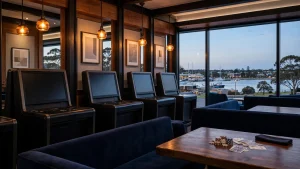
Accordingly, there is no sound basis for naming particular clubs as places to play or ranking them as the best pokies venues in a Tasmanian CBD. Such claims would require current, venue-specific confirmation of machine availability and location. Without it, a list could confuse a club’s general activities with its gaming facilities. The same caution applies to claims that a venue is convenient, suitable or especially well equipped: those descriptions need evidence beyond a CBD label.
Responsible-gambling arrangements also need to be kept distinct from claims about a particular club. A report by regionriverina.com.au says that, from 1 July, venues with more than 20 gaming machines must have a dedicated responsible gambling officer (RGO) on duty while the machines are operating. That report is not, on its own, evidence that a named Tasmanian club has machines, meets that threshold or has an RGO on duty. It should not be used to infer venue-level arrangements in Tasmania.
Self-exclusion is a separate issue from identifying which clubs have pokies. It is a responsible-gambling tool, but its availability and administration at a specific Tasmanian club cannot be established merely from the existence of the tool in general. Nor should a reference to self-exclusion be taken as confirmation that a club offers gaming machines or has a particular process in place.
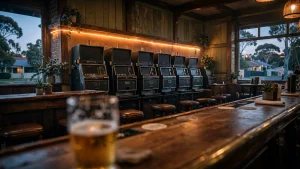
A careful account of clubs and pokies in Tasmania’s CBD therefore needs to distinguish three questions: whether a venue is a club, whether it has pokies, and what responsible-gambling arrangements apply there. Evidence for one does not settle the others. Until venue-specific details can be established, club names and central locations should not be presented as recommendations or as a reliable guide to where pokies are available.
Cashless Pokies and Newcastle Searches: No Verified Tasmania-Specific Details
Cashless payment technology and the presence of pokies are separate questions. A venue accepting electronic payments does not, by itself, show that its machines support cashless play. That feature depends on the machines and payment arrangements in use, so a Tasmania-wide claim cannot be drawn from payment technology alone.
The distinction matters because “cashless” can describe different parts of a transaction, from paying at a venue to using a machine without inserting cash. Those arrangements should not be treated as interchangeable. A claim about a specific machine would need to identify the venue and explain what payment function is meant; without that detail, the term remains too broad to establish a local feature.
It therefore cannot support a recommendation or a claim that a named club or gaming venue there has pokies. Naming a location without reliable venue-level detail would risk presenting an assumption as a fact.
Cashless payment does not change the basic role of responsible-gambling measures. Deposit limits, loss limits, session time limits and self-exclusion are standard tools intended to help manage gambling participation. Their presence does not establish that a machine is cashless, nor does a payment method demonstrate that a venue has any particular safeguards in place.
Accordingly, cashless pokies should not be described as a confirmed Tasmania-wide offering, and the Newcastle wording should not be used to imply a specific local venue. Claims about either point require precise, current details tied to the relevant machine or venue.
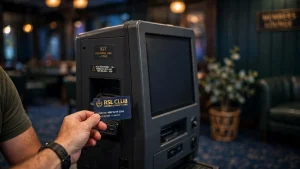
Are online pokies legal for Australian players?
Yes, Australians can legally play on offshore sites that accept them, but operators cannot legally offer real-money online pokies to Australian residents without a domestic licence, and none have been issued. There is no Australian-licensed online casino, and players have no legal recourse in Australia if an offshore site refuses to pay.
What is the legal age for online gambling in Australia?
You must be at least 18 to gamble online in Australia.
How do I know if an online casino is safe to play at?
There is no Australian-licensed online casino, and Australian players have no legal recourse if an offshore casino refuses to pay winnings. ACMA blocks access to illegal offshore gambling sites, but that does not provide a way to recover unpaid winnings.
Can casinos change the RTP of their games?
Yes. Some game providers let casinos choose from multiple RTP settings for the same pokie, so a game’s return percentage may differ between casinos.
What is the cost-benefit calculation of casino promotions?
Compare the bonus with its wagering requirement and any cash-out caps. For example, a $500 bonus with a 40x requirement means $20,000 in bets before withdrawing winnings; if the requirement applies to a $500 deposit plus a $500 bonus at 35x, it means $35,000 in bets.