
How to assess claims about South Australian pokies
A practical look at what game titles, RTP claims and venue searches can—and cannot—confirm in South Australia.
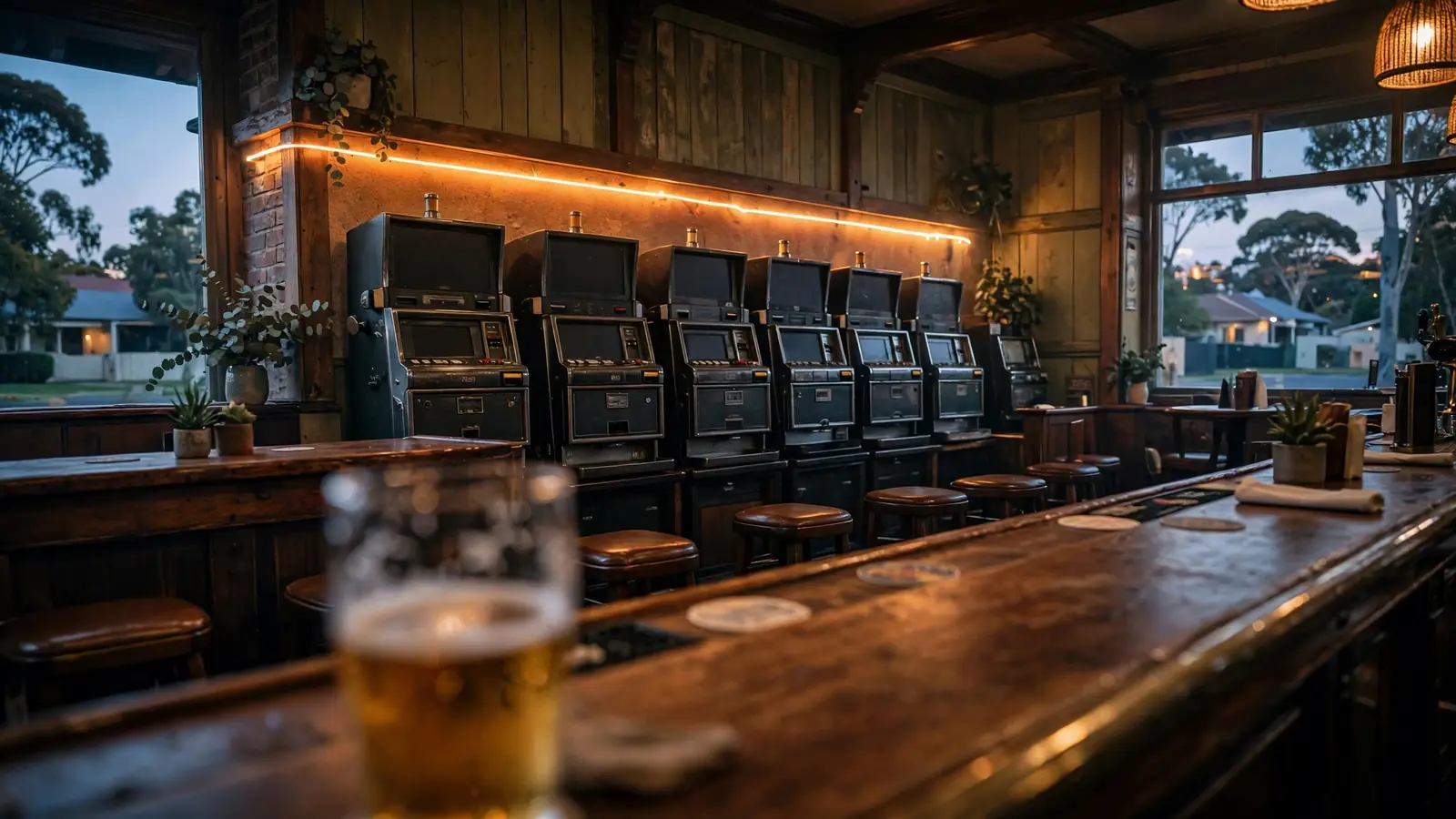
Pokies in South Australia: What the Available Evidence Can Establish
“Best” can refer to different things: a game’s theme, its features, its volatility or its stated return to player (RTP). Those qualities are not interchangeable. A preference for a particular style is personal, while a claim that one pokie pays more than another requires comparable information about the games and the settings in use. A title alone cannot establish which option offers the higher return.
RTP is a theoretical return figure, not a promise about the result of an individual session. A specialist review reports that some game providers give casinos a choice of RTP settings for the same pokie. If that account applies to a particular game, the title by itself is not enough to identify its return setting at a particular venue. A figure quoted for one setting should not automatically be treated as the figure for every version of that game.
This distinction matters when assessing claims about the best-paying pokies in South Australia. A meaningful comparison would need to identify the exact game and the setting in use, with a reliable basis for comparing like with like. Without that, a list ordered by supposed payout performance would risk presenting unlike information as a ranking. A game’s popularity, appearance or familiar name would not resolve the question of its return setting.
Casinos listed by licence
Choosing pokies in South Australia means weighing what is known about each casino before deciding where to play. This list provides a concise reference to the available licensing, deposit and payout details for 2026.
-
Roby Casino
- License
- Curacao eGaming (Roby Games Ltd)
Roby Casino is listed with a Curacao eGaming licence held by Roby Games Ltd.
-
Neospin
- License
- Curacao Gaming Control Board OGL/2023/176/0095 (Hollycorn N.V.)
Neospin is listed with a Curacao Gaming Control Board licence, OGL/2023/176/0095, held by Hollycorn N.V.
-
WinSpirit Casino
- License
- Curacao eGaming OGL/2024/923/0383 (Antillephone N.V.)
- Min. deposit
- A$30
WinSpirit Casino is listed with a Curacao eGaming licence, OGL/2024/923/0383, held by Antillephone N.V. Its minimum deposit is A$30.
-
Vegaz Casino
- License
- Curacao OGL/2024/1335/0780
- Min. deposit
- EUR 20
Vegaz Casino is listed with a Curacao licence, OGL/2024/1335/0780. Its minimum deposit is EUR 20.
-
House of Pokies
- License
- international iGaming licence – jurisdiction not named in the source
- Payout speed
- PayID 1-24 hours
- Min. deposit
- A$30 (PayID from A$10)
House of Pokies lists an international iGaming licence, though the jurisdiction is not named. PayID payouts are stated as 1–24 hours, and the minimum deposit is A$30, or A$10 when using PayID.
-
DragonSlots Casino
- License
- Curacao Gaming Authority (Jumpman Gaming Ltd)
DragonSlots Casino is listed with a Curacao Gaming Authority licence held by Jumpman Gaming Ltd.
-
Ricky Casino
- Payout speed
- crypto under 1 hour, PayID 1-3 business days
- Min. deposit
- A$20 (A$30 to qualify for the bonus)
Ricky Casino lists crypto payouts under one hour and PayID payouts in 1–3 business days. The minimum deposit is A$20, or A$30 to qualify for the bonus.
-
Wild Tokyo
- License
- Curacao
- Payout speed
- crypto 30-60 minutes, fiat 1-5 days
- Min. deposit
- A$10
Wild Tokyo is listed with a Curacao licence. Its minimum deposit is A$10, with crypto payouts stated as 30–60 minutes and fiat payouts as 1–5 days.
-
Rollero Casino
- License
- Curacao Gaming Control Board OGL/2023/176/0095 (Hollycorn N.V.)
Rollero Casino is listed with a Curacao Gaming Control Board licence, OGL/2023/176/0095, held by Hollycorn N.V.
-
Lucky Dreams
- License
- Curacao
- Min. deposit
- A$20 (POLi)
Lucky Dreams is listed with a Curacao licence and a minimum deposit of A$20 when using POLi.
RTP also needs to be distinguished from what happens on a particular spin. Each spin is generated through a Random Number Generator, so an earlier result does not determine the next one. A run of wins or losses is not, by itself, evidence that a game is due to change direction. Nor does a return figure establish that a player will receive that proportion of their stakes over a short session. Treating a theoretical measure as a prediction of an individual outcome would overstate what it can show.
The same care applies to comparisons across locations. A pokie’s name may appear in more than one casino or venue, but that does not establish that every installation uses the same RTP setting. Conversely, the possibility of different settings does not establish that a particular South Australian venue has selected a lower or higher one. Such claims require information about the specific installation, not an inference from the game title or the venue’s location.
For South Australian players, therefore, “best pokies” is not a single measurable category on the information that a game name supplies. A preference-based description can be useful for distinguishing themes or play styles, but it should not be recast as a claim about superior returns. A return comparison needs its own evidence, and the result should be described as a comparison of stated settings rather than a forecast of winnings.
This limit also affects broad labels such as “South Australia casino pokies.” They describe a place or a category, not a uniform set of games with a shared return. Neither the state name nor the word “casino” identifies a particular pokie’s configuration. Claims about a game being the best in the state, in the CBD or across South Australia would need a defined comparison and information tied to the relevant machines. A geographic label cannot substitute for those details.
The responsible distinction is between what can be described and what can be predicted. A provider may make different RTP settings available for a given game, according to a specialist review, and spins are generated independently. Those points explain why a game title cannot, on its own, support a dependable ranking by payout. They do not establish which South Australian pokie has the highest setting, how a venue has configured a machine or what any individual will win. A claim of “best paying” needs to be read with those boundaries in mind rather than as a guarantee of better results.
Do
- Treat RTP as a theoretical measure
- View each spin as an independent event
- Distinguish between themes and returns
Don't
- Treat RTP as a guarantee of winnings
- Assume a win/loss run predicts the next spin
- Use a game title to identify its local RTP
Finding a Venue Open Now: The Limits of Available Information
A venue’s opening status is a time-specific fact. A listing that describes a place as open, or gives a regular schedule, does not by itself establish that its doors are open at a particular moment or that its pokies are operating. Those are separate conditions: a venue may be accessible while gaming machines are unavailable, or its schedule may have changed.
This distinction matters when looking for somewhere to play in South Australia early in the morning, late at night or at another particular time. A general description of a venue cannot confirm its status at the time the information is read. Without a current, venue-specific confirmation, naming a place as open now would go beyond what can be established. The same caution applies to claims about early access: a search result or an old schedule is not proof that pokies are operating at the requested hour.
Opening information also has a limited shelf life. A schedule may change, and a listing can remain visible after the details cease to be accurate. Even a current statement about a venue’s general operating pattern would not necessarily verify an exceptional closure or a temporary change. For a time-sensitive decision, the relevant evidence would need to identify the venue and apply to the intended visit, rather than simply describe its usual arrangements.
There is also a difference between a venue being open and pokies being available. The first concerns access to the premises; the second concerns the machines themselves. A statement about one should not be treated as confirmation of the other. Nor does a location’s presence in a general directory establish that it has gaming machines. These distinctions prevent a broad label such as “open” from being taken as a complete account of what is available on site.
Searches for South Australian pokies that are open now express a practical need, but the wording of that need does not supply evidence about any particular venue. Search results can point towards information worth checking; they cannot convert an unconfirmed listing into a verified live status. A careful account therefore avoids naming venues, assigning opening times or implying immediate availability unless those details have been confirmed for the relevant place and time.
The same restraint applies to claims about opening early or remaining open late. A specific hour in a search does not establish a schedule. It indicates when access is sought, not which venues provide it. Without venue-level confirmation, no reliable distinction can be made between locations that may be open, those that are closed, and those where the premises are accessible but pokies are not operating. Treating these possibilities as interchangeable would overstate what a general listing can show.
Opening status and payout percentage are separate questions. A venue’s accessibility says nothing about the return setting of a particular pokie, and a published return figure would not show whether that machine is operating at a given time. Each spin is generated as a separate random event, so a return percentage is not a prediction of the result of an individual play session. It describes a theoretical measure over play, not a promise about a particular outcome.
There is an additional qualification when interpreting return percentages: a specialist review has reported that providers may make more than one return setting available for the same game, allowing the setting to vary between casinos. That report does not establish the configuration of any South Australian venue or machine. A game title alone would therefore not be enough to infer a particular local return figure. An asserted percentage needs to be tied to the specific game configuration and the place where it is offered; it should not be inferred from a venue’s opening status or from the name of a game.
For people comparing time-sensitive information, the useful distinction is between a routine schedule, a current confirmation of premises access and confirmation that pokies are operating. These are not interchangeable records. A schedule can help describe expected hours, but only timely confirmation can address present circumstances, and confirmation of premises access does not necessarily answer whether gaming machines are available. Each claim should be read at the level it actually supports.
Accordingly, no South Australian venue can be identified as open at this moment on the basis of a general statement about the market. Nor can a specific early or late opening time, machine availability, or local payout percentage be inferred from the wording of a search. Those claims require direct, current evidence specific to the venue and, for machine operation or returns, to the relevant pokies. The distinction is not a technicality: it separates an expressed intention to visit from a verified description of what is happening at a particular location.
Pokies Near the Airport and Other Search Areas
A venue described as being near an airport, the central business district or a northern suburb cannot be assessed from the area label alone. “Near” has no fixed meaning without a confirmed venue address and a defined point of comparison. A result grouped under an airport heading, for instance, does not establish how far away it is, how long a journey would take or whether the route is practical.
The same distinction applies to searches for pokies in South Australia’s CBD or central areas. These terms can refer to broad parts of a city rather than a single, consistently defined boundary. A venue’s inclusion in a broad location category would not, by itself, confirm that it is inside the CBD or close to a particular landmark. Nor does a general state-level result establish that a venue is in the area being considered.
Airport searches have a further ambiguity: the airport named or implied may not be clear from the wording alone. Without a confirmed location, it would be unreliable to identify a nearby venue or recommend one on the basis of proximity. A map result may show a point on a screen, but that is not enough to substantiate a distance or a claim about convenience.
Terms such as “north” and “central” are also relative. Their boundaries depend on the city or locality in question, and a search label does not show which boundary has been used. Likewise, a place name that appears alongside South Australia may refer to a different location or may have been entered in error. The wording alone cannot resolve that uncertainty, so it should not be treated as evidence that a relevant venue exists there.
“Near me” is even more dependent on context. It describes a relationship to a person’s location, which can vary from one search to another. It cannot identify a stable set of venues or establish which one is closest without reliable location data. A general result for South Australia cannot substitute for that information.
These limits matter because proximity is not a single fact. It may refer to straight-line distance, road distance, travel time or simply being within the same broad district. Those measures can produce different conclusions. Unless the location of the venue and the basis of comparison are clear, a statement that a place is “near” an airport or CBD risks giving greater precision than the evidence supports.
Accordingly, location wording should be read as a description of the area someone has in mind, not as confirmation of a particular venue, address or distance. No venue recommendation can be justified solely by labels such as airport, CBD, north or central. This does not establish that no venues are in those areas; it establishes only that area-based wording, without location-specific confirmation, cannot support a reliable proximity claim.
Online Pokies and Deposits: The Legal Position in Australia
For people in South Australia, the legal position on online pokies is set by Australian law, not by the state named in a website’s advertising. Under the Interactive Gambling Act 2001, companies must not provide real-money online casino games, including pokies, to people in Australia unless they hold a domestic licence. No such licences have been issued, and there is no Australian-licensed online casino.
An offshore site may accept Australian customers, but that does not make its service locally licensed or give customers the protections of an Australian online casino. If an offshore operator refuses to pay winnings, the customer has no legal recourse in Australia to recover them. The distinction matters when assessing claims about real-money play, high limits or bonus offers: the presence of an offer does not change the legal status of the service.
This also limits what can responsibly be said about “best-paying” online pokies in South Australia. A game’s advertised return figure would not establish the return setting used by a particular operator, and it would not guarantee an individual outcome. Each spin is an independent random event. More importantly, a claimed payout rate cannot resolve the central legal and practical risk of using an offshore site: there is no Australian-licensed online casino, and winnings disputed with an offshore operator cannot be pursued through Australian legal recourse.
Legal Risk
Under the Interactive Gambling Act 2001, there are no Australian-licensed online casinos, and winnings disputed with offshore operators cannot be pursued through Australian legal recourse.
Deposit methods should be considered separately from licensing. PayID is a payment mechanism, not evidence that an operator is licensed, that a game is fair, or that its return settings are transparent. To use PayID for real-money play with an online casino, it must first be linked to a bank account. The availability of a payment route does not alter the prohibition on operators providing online casino games to people in Australia without a domestic licence.
Claims about no-deposit bonuses also need to be read as terms offered by an offshore operator, not as a sign of Australian authorisation. A bonus may carry conditions that affect whether winnings can be withdrawn; its headline value alone does not establish what can be claimed. The same caution applies to advertised maximum bets or high-limit play. Such statements describe an operator’s offer, not a legal protection or a reliable measure of expected returns.

The practical distinction is therefore between domestic authorisation and offshore access. Australian law prohibits companies from offering real-money online pokies to Australian residents without a domestic licence, and no domestic online casino licences have been issued. An offshore site’s willingness to accept a deposit, including through PayID, does not fill that gap. Nor does the law’s focus on operators provide a means of recovering winnings from an offshore casino if a payment dispute arises.
South Australian Pokies Venues and Machine Oversight
Venue oversight is not limited to the presence of pokies. A report published by regionriverina.com.au describes requirements for venues above a specified machine threshold: they must have a dedicated responsible gambling officer (RGO) on duty while the machines are operating. The same report describes a transition period for venues to put the staffing arrangement in place and remove signage covered by the changes. These are operational responsibilities, not a basis for ranking venues or identifying a “best” pokies venue.
The threshold matters. The reported RGO requirement applies to venues with more than 20 gaming machines; it does not describe a blanket staffing rule for every venue with pokies. Nor does the report establish that a particular South Australian venue meets the threshold or has an RGO present. The distinction between a stated requirement and evidence of individual compliance is important when considering venue oversight.
The report also describes a gambling incident register as a venue responsibility. It is intended to record occurrences, including instances in which a patron’s behaviour indicates possible gambling harm. This makes the register a record of incidents rather than a public rating of a venue or its machines. Its function is to document relevant events for venue oversight.
The transition arrangements are described in the same report: venues have a one-month grace period to remove signage and introduce responsible gambling officers. Because the report presents these measures as part of a change, the grace period should be understood as a transitional provision, not as a continuing allowance for venues to postpone their responsibilities. The report does not provide a calendar year for the stated 1 July commencement, so the date alone cannot establish when a particular venue’s obligations began.
For South Australian venues, these details are best read as a reported account of venue-level responsibilities, not as proof that every local venue is covered by the same rule. The machine threshold, the officer requirement, the incident register and the signage transition each describe a specific aspect of oversight. They do not establish the number of machines at any named venue, its staffing arrangements, or whether its records and signage comply. A venue’s individual status would require evidence about that venue and the rules applying to it.
Opening Hours and Responsible Gambling Officer Coverage
A requirement for responsible gambling officer coverage is not a timetable for when pokies are available. It describes a staffing obligation linked to machine operation, so it cannot establish whether a particular South Australian venue is open around the clock, or when its machines start and stop operating. Claims about 24-hour access therefore need confirmation from the venue itself and should not be inferred from this staffing rule.
A report by regionriverina.com.au says that, from 1 July, venues operating more than 20 gaming machines are required to have a dedicated responsible gambling officer (RGO) on duty whenever those machines are running. The condition is tied to the machines’ operating period, not simply to a venue’s overall opening hours. A venue may have areas or services open at times when its machines are not operating; the RGO requirement does not determine those arrangements.
This distinction matters when interpreting statements about late-night or continuous access. Even if an RGO is required during machine operation, that does not mean the machines operate continuously, nor does it indicate the hours of any individual venue. Conversely, the staffing rule does not itself specify a venue’s closing time. It establishes a condition for operation rather than a public schedule.
The same limitation applies to broad descriptions of pokies opening hours across South Australia. A statewide staffing requirement cannot be used to calculate or generalise venue hours. Opening times, machine operating times and the presence of an RGO are related in practice, but they are separate facts. Establishing a specific schedule requires information for the individual venue and the relevant date.
The report also describes a transition period for venues to adjust to the requirements: it says they have one month to remove signage and introduce responsible gambling officers. That period concerns compliance arrangements; it does not extend or define machine operating hours. Nor does it provide a basis for assuming that every venue has the same schedule.
Accordingly, an answer to whether pokies are available at a particular hour cannot be derived from RGO coverage alone. The rule identifies when a dedicated officer must be present at certain venues, while venue-specific opening and machine schedules remain a separate matter. A claim of 24-hour availability needs direct, current confirmation rather than an inference from the officer requirement.
Crown Casino Searches: What Can Be Verified
The name Crown in a search for South Australian pokies does not, by itself, establish that a Crown venue or pokies room is located in South Australia. It would therefore be inaccurate to treat the wording “Crown Casino” as evidence of a local venue, or to describe particular pokies as available there.
The same distinction applies to requests for the best pokies room. A ranking would require identifiable venues and comparable information about their facilities or machines.
Questions about maximum cash payouts require even more specific information. A figure would need to relate to a defined machine, its rules and the relevant venue’s arrangements. A search for a maximum does not establish that a particular payout is available at a local venue, nor that different pokies share the same payout conditions.
These limits matter because venue location, machine availability and payout terms are separate claims. Evidence for one would not automatically establish the others. A reference to Crown would need to identify the relevant South Australian premises before it could support a claim about that venue’s pokies room; a claim about a machine or payout would then need its own supporting detail.
Accordingly, Crown should not be presented as a South Australian pokies destination on the basis of the name alone. Nor can a “best” room or maximum cash payout be assigned to Crown in the state. The defensible description is narrower: Crown-related searches express an interest in a possible local venue, its pokies and payout arrangements, but they do not verify any of those particulars. This avoids turning a search phrase into a location claim or a machine-specific promise.
CBD Clubs and Pokies: Evidence Gaps
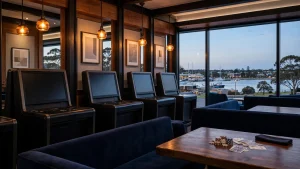
A club’s location in the central business district does not, by itself, establish that it has pokies. Nor does the general association between clubs and gaming machines show that a particular South Australian club offers them. These are separate claims: one concerns a venue’s identity and location; the other concerns its facilities.
That distinction matters when comparing clubs. A list of CBD venues would not be a list of places with pokies unless machine availability had been established for each venue. Similarly, describing a club as a place to play would turn an assumption into a recommendation.
The word “best” also requires a defined measure. It might refer to the number of machines, the range of games, access arrangements or some other feature. Those measures are not interchangeable, and none can be assigned to a CBD club without venue-specific evidence. General statements about pokies do not resolve those comparisons.
Self-exclusion is a distinct issue from identifying clubs. It concerns a person’s ability to restrict their own gambling, not whether a particular CBD venue has machines. The presence or absence of information about a club’s facilities should not be treated as information about its self-exclusion arrangements.
Accordingly, searches for clubs with pokies in central Adelaide should not be read as confirmation that any named venue offers them. The geographic label narrows the area of interest, but it does not establish the facilities of venues within it. For an evidence-based account, claims about a club’s machines would need to be tied to that club specifically rather than inferred from its location or category.
Cashless Pokies and Newcastle-Related Searches
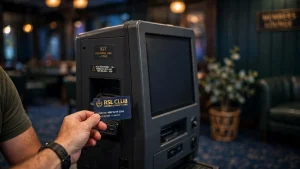
Cashless play and online deposits describe different payment settings. A payment method used to fund an online account does not show how a venue’s pokies accept money. PayID, for instance, is a transfer service built on Australia’s New Payments Platform. It allows transfers using an email address, mobile number or ABN, and depends on a bank account being linked to PayID. Those features concern transfers between accounts; they do not establish whether a physical machine accepts cashless payment.
The distinction matters because “cashless” can refer to different arrangements, including a payment made at a machine or a transfer through a separate account. Without details about a particular venue and its equipment, the term alone cannot establish which arrangement is in use. Nor does the presence of a payment option for online deposits establish that a venue’s machines support it. Payment information should be interpreted in the setting it actually describes.
A Newcastle-related request alongside South Australian pokies also needs to be treated as a separate location question, not as evidence that a particular South Australian venue or machine has been identified. Location wording alone cannot establish that a venue is in the relevant area, offers pokies, or supports cashless play. Those are separate claims and require venue-specific information.
The distinction also prevents online payment details from being treated as a measure of a machine’s operation. PayID’s role in transferring funds says nothing about a pokie’s payment interface, game settings or return. A machine’s payment method and its game characteristics are not interchangeable evidence.
Accordingly, cashless pokies in South Australia and Newcastle-related venue information are not interchangeable topics. A claim about either requires information tied to the relevant venue or machine. Online deposit details cannot fill that gap, and a location reference cannot verify a payment feature. No ranking of games follows from either kind of wording.
Responsible Gambling Tools and South Australian Pokies
Responsible-gambling tools address the amount of time and money spent gambling; they do not identify which pokies are more favourable. Deposit limits can restrict money added to an account, while loss limits and session time limits set boundaries on losses or playing time. Self-exclusion is another standard option, intended to prevent access to gambling for a chosen period.
These measures are safeguards, not evidence that a particular game is safer or more likely to pay. Pokies outcomes are random, and individual limits do not change how a game operates. No tool can establish that a game is the “best” choice on the basis of its name or location in South Australia.
BetStop is a national self-exclusion register, but its scope is limited: it applies to Australian-licensed operators and does not bind offshore gambling sites. It should therefore not be treated as a universal block on access to gambling. This distinction matters when assessing what a safeguard can and cannot do.
Eligibility is separate from the use of limits or exclusion tools. The legal age for gambling in Australia, including online pokies, is 18. Responsible-gambling measures do not change that threshold.
For South Australian pokies, these general safeguards provide a framework for setting boundaries around gambling, rather than a method for comparing venues or ranking games. Their practical effect depends on the setting in which they are offered and the scope of the relevant service. The presence of a limit or exclusion feature is not a measure of a pokie’s return, fairness or likely outcome. Nor does it make gambling risk-free. A careful account keeps these points distinct: age determines eligibility, personal controls can constrain participation, and neither supplies evidence about which game will produce a particular result.
What is the legal age for online gambling in Australia?
You must be 18 or older to gamble online in Australia.
Are online pokies legal for Australian players?
Australian companies cannot legally offer real-money online pokies without a domestic licence, and none have been issued. The law targets operators, not players, so Australians can play on offshore sites that accept them, but have no legal recourse in Australia if one refuses to pay winnings.
Do PayID deposits qualify for bonuses?
Yes. PayID is treated like any other qualifying deposit method at the recommended sites.
Can casinos change the RTP of their games?
Yes. Some providers let casinos choose between multiple RTP settings for the same game, so the same pokie can have different stated returns at different casinos.