
Know what a pokie can—and cannot—tell you
The guide weighs game features, demo play, odds, payments and mobile access against Australian legal limits and practical risks.

Online Pokies in Australia: Legal Status and Enforcement
The legal position on real-money online pokies in Australia is directed principally at the businesses that provide them. Under the Interactive Gambling Act 2001, operators commit an offence by offering online pokie games for money to people located in Australia. The prohibition covers online casino-style games, including slots, whether the service is presented as a pokie machine, a website or another digital product. There is no Australian licence that authorises an operator to offer real-money online pokies to Australian residents.
This distinction matters because the law does not make an Australian resident’s act of playing an offshore real-money pokie an offence under the Act. The operator’s conduct and the player’s conduct are treated differently: the prohibition applies to providing the service to people in Australia, not to the resident who uses it. That does not make an offshore service locally authorised. A licence issued elsewhere cannot substitute for an Australian licence, and no such Australian licence exists for this activity.
The same framework applies when a service is accessible through a browser or software designed for online play. The method of access does not alter the central legal question: whether an operator is providing prohibited real-money online gambling to people in Australia. Nor does a product’s description change the position if it is, in substance, a real-money online pokie service. The legal status is therefore not determined by labels such as “casino,” “simulator” or “machine”; the relevant distinction is between real-money gambling services and other forms of digital play.
Casinos listed by licence
Choosing a pokie site for 2026 is easier when you check the information available about its licensing, deposits and payouts before playing. Use these brief profiles as a starting point, and review the site’s terms before signing up.
-
Roby Casino
- License
- Curacao eGaming (Roby Games Ltd)
Roby Casino is listed with a Curaçao eGaming licence held by Roby Games Ltd.
-
Neospin
- License
- Curacao Gaming Control Board OGL/2023/176/0095 (Hollycorn N.V.)
Neospin is listed with Curaçao Gaming Control Board licence OGL/2023/176/0095, held by Hollycorn N.V.
-
WinSpirit Casino
- License
- Curacao eGaming OGL/2024/923/0383 (Antillephone N.V.)
- Min. deposit
- A$30
WinSpirit Casino is listed with Curaçao eGaming licence OGL/2024/923/0383, issued to Antillephone N.V. Its minimum deposit is A$30.
-
Vegaz Casino
- License
- Curacao OGL/2024/1335/0780
- Min. deposit
- EUR 20
Vegaz Casino is listed with Curaçao licence OGL/2024/1335/0780. Its minimum deposit is EUR 20.
-
House of Pokies
- License
- international iGaming licence – jurisdiction not named in the source
- Payout speed
- PayID 1-24 hours
- Min. deposit
- A$30 (PayID from A$10)
House of Pokies lists an international iGaming licence, though the jurisdiction is not named in the source. PayID payouts are listed at 1–24 hours, and the minimum deposit is A$30, or A$10 via PayID.
-
DragonSlots Casino
- License
- Curacao Gaming Authority (Jumpman Gaming Ltd)
DragonSlots Casino is listed with a Curaçao Gaming Authority licence held by Jumpman Gaming Ltd.
-
Ricky Casino
- Payout speed
- crypto under 1 hour, PayID 1-3 business days
- Min. deposit
- A$20 (A$30 to qualify for the bonus)
Ricky Casino lists crypto payouts under one hour and PayID payouts in 1–3 business days. The minimum deposit is A$20, or A$30 to qualify for the bonus.
-
Wild Tokyo
- License
- Curacao
- Payout speed
- crypto 30-60 minutes, fiat 1-5 days
- Min. deposit
- A$10
Wild Tokyo is listed as Curaçao-licensed. Its stated payout times are 30–60 minutes for crypto and 1–5 days for fiat; the minimum deposit is A$10.
-
Rollero Casino
- License
- Curacao Gaming Control Board OGL/2023/176/0095 (Hollycorn N.V.)
Rollero Casino is listed with Curaçao Gaming Control Board licence OGL/2023/176/0095, held by Hollycorn N.V.
-
Lucky Dreams
- License
- Curacao
- Min. deposit
- A$20 (POLi)
Lucky Dreams is listed as Curaçao-licensed. Its minimum deposit is A$20 via POLi.
Advertising is also restricted. Promoting offshore online casino services to people in Australia does not provide a lawful route around the prohibition on offering them. This is relevant to how such services appear online: an advertisement, affiliate page or other promotional material may itself be associated with a prohibited service, even where it does not host the game directly. The legal framework concerns the provision and promotion of services, rather than merely the location of the game software.
ACMA’s enforcement role
The Australian Communications and Media Authority (ACMA) is the federal agency responsible for enforcing the Interactive Gambling Act 2001 and monitoring compliance with federal interactive gambling rules. Its role is distinct from the question of whether a resident has committed an offence by playing. Enforcement is aimed at prohibited services and their promotion, rather than treating the player as the target of the Act’s operator prohibition.
One tool available to ACMA is to ask Australian internet service providers to block access to websites that provide prohibited interactive gambling services or advertise them. A block can make a site harder to reach from Australia, but it does not change the underlying legal status of the service. The service remains prohibited if it offers real-money online pokies to people in Australia, regardless of whether a particular website can still be accessed.
 Best pokies in Adelaide: hours and venue checksLearn why venue trading hours do not confirm gaming-area availability, and how to assess claims about payouts, late opening and online pokies.
 Aussie Online Pokies in Australia: Legal PositionLearn how Australian law treats offshore real-money pokies, why no domestic online casino is licensed, and what to check around payments, bonuses…
ACMA reports that it has blocked more than 1,455 illegal gambling and affiliate websites following enforcement actions since November 2019. That figure includes both gambling services and affiliate websites, so it should not be read as a count of pokie operators alone. It indicates the scale of website-blocking activity, not the number of individual Australian players or gambling sessions.
Figures for services withdrawing from the Australian market are not consistent across accounts. One reported count says that more than 210 illegal services have withdrawn since enforcement began in 2017; another gives the figure as over 190 for the same period. Both figures describe reported withdrawals, not a guarantee that all prohibited services have disappeared or that every blocked website represents a separate operator.
What the distinction means in practice
An offshore site may continue to describe itself as licensed in another jurisdiction, but that status does not create permission to provide real-money online pokie games to people in Australia. The Australian rule concerns the service offered to people physically in the country. It is therefore possible for a business to hold an offshore licence and still be acting contrary to Australian law when it offers the service to this market.
At the same time, the operator-focused prohibition should not be misstated as a player offence. Under the Interactive Gambling Act 2001, an Australian resident does not commit an offence merely by playing real-money pokie games online with an offshore operator. This is a distinction about liability under that Act; it does not transform the operator’s service into a locally licensed or authorised one.
Legal Status
Under the Interactive Gambling Act 2001, it is an offence for operators to offer real-money online pokie games to people located in Australia.
Website blocking and withdrawals also do not establish that every online pokie service has been eliminated. ACMA’s actions demonstrate that enforcement includes measures against access and promotion, while the reported withdrawal totals show that some services have left the market. Neither point changes the legal rule: providing real-money online pokie games to people in Australia is prohibited for operators, and an Australian licence for doing so is not available.
What a Pokie Machine Offers Beyond Its Name
A pokie’s title can identify a game, but it does not describe how that game is structured. Two machines may have different paytables and different numbers of paylines, even when their names or themes appear similar. Comparing those details provides a more concrete basis for distinguishing titles than relying on a label such as “best pokie machine”.
A paytable sets out the prize combinations recognised by a game and the awards attached to them. Its layout and rules are specific to the title. Before play, the paytable can show which symbols or combinations count and how the game treats them. Reading it is therefore useful for understanding what the machine recognises as a winning result; it does not establish how often such a result will occur.
 Pokies in South Australia: Evidence and RTPLearn what game titles and RTP claims can establish, and why a title alone cannot confirm a pokie's return setting at a…
 Casino in Tasmania: Stay, Facilities and DiningCompare stay options, casino facilities, dining and practical visit details. A hotel is on-site only when the casino’s own accommodation information confirms…
Paylines describe the lines across the reels on which a qualifying combination may be counted. Titles can offer different numbers of paylines, and those lines may be fixed or variable. With fixed paylines, the available lines remain in place rather than being selected from a smaller set. Variable paylines allow a choice about how many lines to use, where that option is offered. The game’s rules determine how line selection works, so the labels alone are not a substitute for checking its instructions.
These distinctions affect the structure of play. A player comparing pokies machines can note whether a title has fixed or variable lines, how many it offers, and what its paytable says about qualifying combinations. That comparison is specific to the game’s rules. A larger number of paylines does not, by itself, show that a machine is better: the paytable and line arrangement need to be considered together, and the number alone does not describe the value of a result.
A practical comparison can be kept simple:
- Paytable: What combinations are recognised, and what awards are assigned to them?
- Paylines: How many lines are available, and are they fixed or variable?
- Rules: Does the game explain clearly how a result is counted across those lines?
This approach also helps separate presentation from structure. A theme, title, or visual style may make one pokie more immediately appealing, but those qualities do not explain its paytable or line rules. Conversely, games with different themes may still need to be assessed through the same basic questions about combinations and paylines. Names are useful for identifying titles, not for making a reliable comparison of their rules.
The phrase “best pokie machine” has no single answer on these structural details alone. A player who prefers not to choose lines may find fixed paylines easier to understand, while someone who wants a choice may prefer a title with variable paylines. These are preferences about how a game is arranged, not evidence that one format produces better results. The paytable remains necessary in either case because the line format does not, on its own, explain what the game pays for.
For a pokie machine in Australia, the same comparison applies: the title’s actual rules matter more than assumptions drawn from its name or appearance. Paytables and paylines provide a way to describe what differs between games without treating a particular title as universally superior. They also keep the comparison focused on game structure. Questions about the likelihood or size of results require separate evidence and cannot be answered merely by counting paylines or reading a list of prizes.
Do
- Check the paytable for recognised combinations
- Verify if paylines are fixed or variable
- Read the game rules for result counting
Don't
- Rely on a title like "best pokie machine"
- Use a game's theme to judge its structure
- Assume more paylines mean better results
Free Play and What Demo Results Can—and Cannot—Show
A free-play version can provide a low-stakes way to become familiar with a pokie’s appearance and controls. It may show the theme, reels, symbols, sound and the sequence of actions involved in starting a spin. That can help establish whether the presentation is understandable or appealing before any real-money play is considered. It does not show what a later paid session will produce.
The distinction matters because a run of demo spins is only a sample of outcomes, not a forecast. Online pokie outcomes are determined by a random number generator, with each spin independent of the one before it. A result in free play therefore does not make a similar result more likely on the next spin, whether that next spin is in demo mode or involves money. A cluster of wins, a long stretch without one, or a visually memorable bonus round offers no reliable signal about future results.
What a demo can reveal
Free play is most useful for observing the experience rather than measuring performance. It can expose how clearly the game communicates its controls and on-screen information, and whether the reels and animations are easy to follow. A player can also see how the game presents its symbols and themes without risking money. Those observations concern design and usability; they are not evidence that the game is favourable or that a particular approach will improve the outcome.

A demo may also help distinguish a game’s presentation from assumptions based on its title or artwork. A familiar theme does not establish how a game behaves, and a dramatic animation does not indicate that a win is more likely. The screen describes what has occurred in the demonstration; it does not provide a dependable guide to a future real-money session.
What practice results cannot prove
Repeated free spins do not establish a pattern that can be carried into paid play. Nor can a short practice session prove that a machine is “due,” that a sequence is about to repeat, or that stopping and restarting will change the next result. Such interpretations confuse a limited run of observations with a rule about future outcomes.
The same caution applies to informal pokie strategies built around demo results. A player may try different button choices or observe how the interface responds, but those actions should not be treated as methods for controlling random outcomes. Demo play cannot establish that a timing habit, a preferred sequence or a selected theme improves the chance of a win.
Free play should also not be confused with a free route to real-money gambling. A practice mode and a paid game involve different stakes, and the emotional and financial consequences of a paid session are not reproduced by a demonstration. Even when the visual presentation appears similar, demo results are not indicative of real-money outcomes.
Where real-money play is contemplated, a loss limit should be set beforehand and treated as a firm boundary, not adjusted in response to a demo run or a promising start. The legal position also differs from the casual impression created by an accessible practice screen: real-money online pokies are not legally offered to Australian residents. Free play can help assess whether a game’s presentation is enjoyable, but it cannot establish future winnings, reduce the uncertainty of paid spins or make an otherwise prohibited service lawful.
Land-Based Pokies in Western Australia: Crown Perth
For land-based casino pokies in Perth, Crown Perth is the only legal casino venue. It has more than 2,500 gaming machines, offering a broad choice of titles and formats in one location. That scale does not establish that any particular machine is the best Australian pokie machine, or that one title will pay more to an individual player. A machine’s presence on the floor is not evidence of a higher chance of a return.
Most machines at Crown Perth are reported to operate with an RTP between 87% and 92%. RTP describes a game’s return across a very large number of spins, rather than the amount a player should expect from a particular visit. It cannot identify a highest-paying pokie machine for a short session, and a higher RTP does not ensure a win. Outcomes over an individual session can vary widely.

The range is a broad description of the floor, not a machine-by-machine guide. Crown Perth does not publish a list stating the RTP for each machine. As a result, the general range cannot show which setting applies to a particular casino pokie machine, nor can it support a reliable ranking of machines by payout percentage. A title’s name alone is not enough to establish its setting.
Information available on the machine
Western Australian rules require every legal pokie to display its rules, paylines and prize table. These details provide a practical way to understand how a machine is configured before play: the rules explain how a game works, while the paylines and prize table set out how winning combinations are assessed and what prizes they may attract. They do not, by themselves, establish the RTP of that specific machine.
This distinction matters when comparing pokie machine payouts. A prize table describes possible prizes, not the likelihood of receiving them or the result of a particular session. Nor does a simulator or demonstration version establish how a real-money machine will perform. Results in a simulation cannot be treated as evidence of future payouts on a casino floor.
There is no legal online casino market in Western Australia. That makes Crown Perth’s physical gaming floor a distinct setting from online access, but it does not make its machines predictable or turn the published floor-wide RTP range into a promise. Claims that a machine is “high paying” need a specific, applicable basis; the venue’s overall range cannot verify such a claim for an individual machine.
A measured comparison therefore begins with the information displayed on the machine and treats broad RTP figures as context, not a forecast. RTP is a long-run measure, not a short-term guarantee, and even a comparatively high figure cannot prevent losses during a session. Setting a loss limit before playing helps define the amount at risk without changing the machine’s outcomes.
Game Features, Bonuses and Free Spins
A bonus feature can be reached through ordinary play or, in some titles, triggered by a feature-buy option. The latter changes how the feature is entered: instead of waiting for the required symbols to appear during play, a player pays an additional amount to activate the bonus immediately. It does not remove uncertainty about what the feature will return.
A specialist review describes feature-buy prices in some games as ranging from 50 to 100 times the base bet. That is a reported range, not a standard applying to every title or version. The price is a material part of the decision: it can turn a modest stake into a much larger one in a single action, while the bonus outcome remains uncertain. A feature-buy option should therefore be understood as a higher-cost route into a game feature, not as a way to secure a win.
Bonus rounds may include free spins, during which the game continues without a separate stake for each spin. In some games, landing at least three specified symbols during the free-spins round can award a prize. The precise trigger and prize rules depend on the title. Free spins are not equivalent to cash: winnings may be credited as bonus funds, with conditions attached before they can be withdrawn.
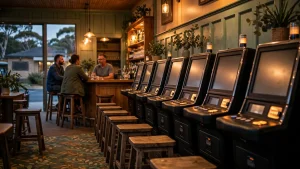
Those conditions matter particularly when a bonus is offered alongside a deposit. A wagering requirement sets the amount of betting that must be completed before bonus-related funds can be cashed out. A specialist review illustrates a 30-times requirement on a $100 bonus as requiring $3,000 in bets before cashout. This is an example of how a stated term works, not a universal offer or a prediction of how much a player will lose or win while meeting it. The required betting can expose funds to repeated game outcomes, and meeting the turnover condition does not guarantee a positive balance.
Bonus terms may also define which games count towards wagering, how free-spin winnings are treated, and whether cashout limits apply. The advertised value of a bonus therefore does not, by itself, show how much can ultimately be withdrawn. Conditions should be read as part of the offer rather than as fine print separate from it. Free-spin winnings are bonus funds and can remain subject to wagering requirements and cashout limits.
These mechanics describe features found in some pokie titles; they do not establish that real-money online pokie games are legally available to Australian residents. Under the Interactive Gambling Act 2001, operators cannot provide such games to people in Australia. The distinction is relevant when bonus terms are encountered on offshore sites: the existence of a feature or promotion does not establish local legal protection, and effective legal recourse may not be available if winnings are withheld.
Understanding Wagering Requirements
A wagering requirement is the amount of betting that must be completed before bonus funds can be cashed out. For example, a 30-times requirement on a $100 bonus requires $3,000 in bets before cashout.
Volatility, Odds and the Limits of Short-Term Results
Volatility describes the pattern of a pokie’s payouts, not whether a particular spin is likely to win. A lower-volatility game tends to return smaller amounts more frequently. A higher-volatility game pays less often, but its occasional wins can be larger. Neither pattern establishes which machine is the best pokie to play: the preferred balance depends on whether more frequent, modest payouts or rarer, potentially larger ones are more acceptable.
These differences can shape how a session feels. A run of small wins may make a lower-volatility game seem more active, while longer gaps between payouts can occur on a higher-volatility game. But a quiet stretch does not show that a large win is due, and repeated small returns do not establish that the next spin will also pay. Short sequences are not reliable evidence of a machine’s future behaviour.
Each spin is independent of the spins before it. Previous results have no influence on the outcome of the next spin, so a machine does not become “ready” to pay after a losing run. The same applies to a sequence of wins: it does not make another win more or less likely. This is central to understanding pokie machine odds. Past outcomes describe what has already happened; they do not provide a dependable forecast.
The sounds and visual effects accompanying a spin are also not evidence about its odds. They may make wins or near-misses feel more significant, but they do not change the underlying independence of outcomes. A near-miss is still a losing result, not a signal that a win is approaching. How to play a pokie machine responsibly therefore involves treating each spin as uncertain rather than trying to infer a pattern from its presentation or recent history.

There is no reliable way to identify a best pokie machine to win from a short session. A high RTP, where it is advertised, does not ensure short-term wins; results over an individual session can vary widely. RTP concerns long-run results, while volatility describes the relative frequency and size of payouts. Neither measure predicts the outcome of a particular spin.
Before play, a loss limit can help define the point at which a session ends. It should not be treated as a way to improve the odds or recover earlier losses. Once the limit is reached, continuing because a machine seems close to paying relies on a pattern that independent spins do not support.
Real-Money Play: Payments and Practical Risks
Payment options reported for offshore services aimed at Australians include Visa, Mastercard, bank transfers and cryptocurrencies such as Bitcoin and Ethereum. This list comes from an affiliate-style review, so it should be read as a report about some operators’ payment offerings, not as a complete or enduring account of the market. Methods can differ between services, and a payment option appearing on a site does not establish that the service is lawful or that a transaction is protected.
Real-money online pokies are not legally available to people in Australia through an authorised local online casino: no Australian licence exists for such services. Under the Interactive Gambling Act 2001, operators are prohibited from providing real-money online pokie games to people in Australia. An Australian resident does not commit an offence merely by playing with an offshore operator, but that does not make the operator locally regulated or give the player the protections associated with a domestic licensing system.
The distinction matters when money is deposited or a withdrawal is requested. An offshore business may be outside the reach of Australian consumer and gambling regulators, leaving limited practical avenues to resolve a dispute or recover funds if a withdrawal is refused. A displayed balance is not equivalent to money received, and payment processing does not itself verify the operator’s reliability. Offshore casinos may also leave players without effective legal recourse if winnings are withheld.
Withdrawal requests may remain pending, and an operator may encourage a player to reverse a request and continue gambling. Reversing a withdrawal returns funds to the account balance and exposes them to further losses; it should not be treated as a neutral administrative step. The stated terms and actual processing can also depend on the operator and payment method, so a deposit route alone cannot establish how or when funds will be returned.
This is not an invitation to use an offshore payment method. Visa or Mastercard appearing among reported options should not be taken as a recommendation to use a credit card for online gambling. No payment method removes the legal and practical risks of offshore real-money play, and cryptocurrency or bank transfers do not create local regulatory protection.
Pokie Apps and Random Outcomes on Mobile
A pokie app changes how a game is displayed and controlled, not the process that determines its outcome. For online pokies, a random number generator produces outcomes, and each spin is independent of the one before it. Moving from a desktop browser to a phone therefore does not make a previous result more likely to recur, or make a particular result due.
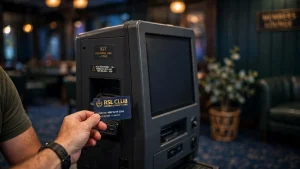
This distinction matters when judging claims about an app’s performance. A sequence of wins or losses on a mobile screen does not establish that the app has become more or less likely to pay. Nor does switching devices provide a basis for predicting the next spin. The same principle applies to an app connected through a pokie machine API: the presence of a technical connection does not, by itself, demonstrate how the game’s outcomes are generated or provide a reliable way to anticipate them.
An app’s interface may make it easier to move between games, view controls or access account functions. Those features are separate from the random process behind each spin. Visual effects, notifications and displayed game history can make patterns seem meaningful, but they do not change the independence of outcomes. A run of results on a phone is not evidence that the next result will follow the same pattern or compensate for earlier losses.
The phrase “best pokie machine app” has no single evidence-based answer on the information available here. App design can be assessed as a matter of usability, but that is different from identifying an app that improves the chances of winning. Similarly, an app’s download price, if any, would not establish the likely result of play. No cost or interface feature can be treated as proof of more favourable outcomes.
A pokie machine jackpot may be shown within a mobile game, but seeing it on a phone does not make a win predictable. The relevant distinction is between presentation and outcome: the screen presents the game, while each spin remains independently generated. A jackpot display or recent result should not be read as a signal about what the next spin will produce.
Mobile access also does not change the legal status of real-money online pokies in Australia. An app is a delivery format, not an authorisation to offer a service that is otherwise prohibited. If play is considered, a loss limit should be set in advance; mobile convenience does not reduce the financial risk.
Networked Games and Progressive Jackpots
A progressive jackpot can be connected to more than one pokie machine. In a networked arrangement, machines—or machines across casinos—are linked so that a shared prize can build across the network. The jackpot is therefore associated with the linked group rather than being described only as a feature of one individual machine.
“Lightning Link,” “Dragon Link” and “Cash Express” are examples of titles used in networked games. Their names identify particular games, but the important distinction here is the shared jackpot structure: multiple machines or casinos participate in building a progressive prize. A title’s presence on a machine does not, by itself, establish that the machine is linked; the relevant feature is whether the game operates as part of a network.
This distinction can help make sense of pokie machine names that appear alongside prominent jackpot displays. A familiar title may be offered in different settings, and the name alone does not explain whether a prize is local to one machine or connected across several. The networked format is the feature that allows a progressive jackpot to build across multiple machines or casinos.
A large displayed jackpot is not evidence that a particular machine is more likely to pay it. Nor does the title name establish when the prize will be awarded. Those are separate questions from how the network is organised, and the fact that a game belongs to a linked system does not reveal the timing of a win.

The practical point is structural rather than predictive: networked games pool the progressive jackpot across participating machines or casinos, while the individual machine remains one point of access to that shared arrangement. “Lightning Link,” “Dragon Link” and “Cash Express” illustrate this model; they are examples, not a ranking of the best pokies or a claim that one title offers better prospects than another. A new release or newly encountered title should be assessed on the same basis: its name alone does not show whether its jackpot is networked.
RTP Settings and Responsible Playing Limits
Return-to-player (RTP) is the share of all wagers that a pokie is designed to return across a very large number of spins. It is a long-run measure, not a forecast of what any individual session will produce. A high RTP does not ensure a win, and results in a short session can differ substantially from the stated figure.

The title alone may not identify its RTP. Some providers let operators select from several settings for the same game, so versions bearing the same name can have different theoretical returns. The relevant figure is the RTP of the specific version offered, not a number associated with the title elsewhere. Where that setting is not clearly displayed, there may be insufficient information to compare versions reliably.
RTP can help describe a game over extensive play, but it cannot establish which pokie will pay during a particular session or when a return might occur. It should not be treated as a way to recover losses or as a reason to extend play. Individual outcomes remain uncertain even when the stated RTP is known.
A practical limit is a predetermined amount that can be lost without affecting essential expenses. Setting that boundary before play, and stopping when it is reached, is more useful than relying on RTP to manage spending. The same principle applies to time: a planned stopping point can prevent a session from expanding in response to losses or wins. These are limits on exposure, not methods for changing a game’s outcomes.
What law governs online gambling in Australia?
The Interactive Gambling Act 2001 governs online gambling services in Australia. It makes it an offence for operators to offer real-money online pokies to people in Australia.
Is online gambling legal in Australia?
Real-money online casino games, including pokies, cannot legally be offered to people in Australia by operators. An Australian resident does not commit an offence under the Interactive Gambling Act 2001 merely by playing with an offshore operator.
Are online pokies legal for Australian players?
Operators are prohibited from offering real-money online pokies to people in Australia, and no Australian licence is available for this activity. A resident who plays with an offshore operator does not commit an offence under the Interactive Gambling Act 2001.
How much money do I need to play pokies?
At Crown Perth, minimum bets typically range from $0.20 to $2.00 per spin, depending on the machine.