
What NSW’s Pokies Evidence Can Actually Tell You
A practical overview of eligibility, machine mechanics, online restrictions and the limits of available venue and opening-hours information.
Access and Playing Conditions in NSW
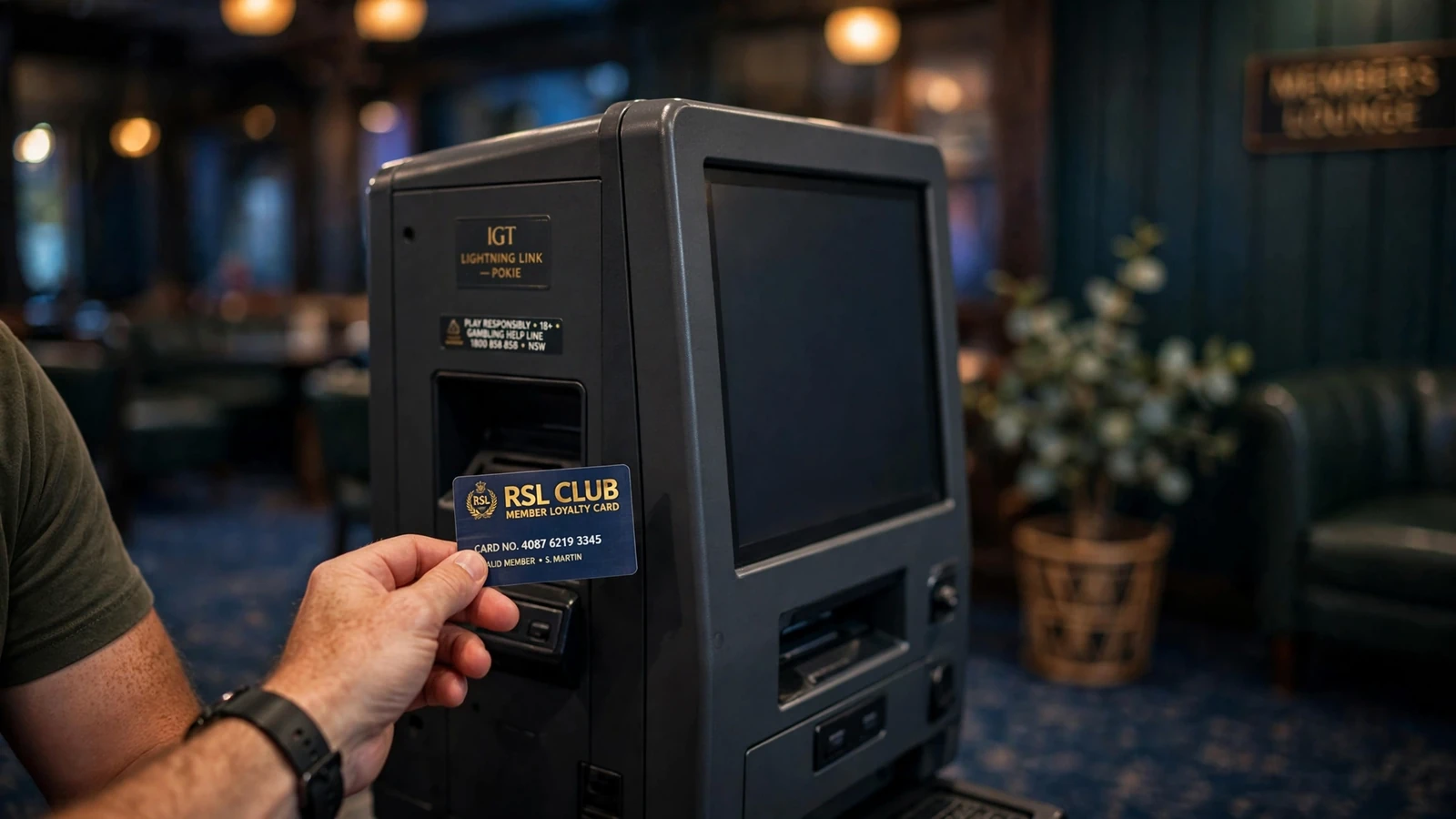
Access to poker machines in New South Wales is shaped by two state-level conditions: an age threshold and mandatory pre-commitment. These rules concern who may take part and the setting of a loss limit before play. They are separate from questions about a venue’s location or operating schedule; legal eligibility alone does not establish whether a particular venue is open at a given time.
A person must be at least 18 to gamble on poker machines in NSW. This makes age a basic condition of participation, rather than a matter that can be resolved by a venue’s general admission arrangements. Venues are required to check identification for poker-machine gambling. The age rule therefore has a practical verification dimension: access depends not only on a person meeting the threshold, but also on the venue being able to establish eligibility. Non-compliance can carry legal consequences.
The age threshold should not be confused with the rules applying to other activities or services. This section concerns poker-machine gambling in NSW specifically. It does not establish conditions for other forms of gambling, nor does it determine whether a particular machine, club or casino is available. For questions about a specific place, the state-wide age condition is only one part of the picture.
Casinos listed by licence
Choosing pokies in New South Wales means checking the details that matter to you before playing. This list provides a concise reference to the available operator information.
-
Roby Casino
- License
- Curacao eGaming (Roby Games Ltd)
Roby Casino is listed with a Curacao eGaming licence held by Roby Games Ltd.
-
Neospin
- License
- Curacao Gaming Control Board OGL/2023/176/0095 (Hollycorn N.V.)
Neospin is listed under a Curacao Gaming Control Board licence, OGL/2023/176/0095, held by Hollycorn N.V.
-
WinSpirit Casino
- License
- Curacao eGaming OGL/2024/923/0383 (Antillephone N.V.)
- Min. deposit
- A$30
WinSpirit Casino is listed with a Curacao eGaming licence, OGL/2024/923/0383, held by Antillephone N.V. Its minimum deposit is A$30.
-
Vegaz Casino
- License
- Curacao OGL/2024/1335/0780
- Min. deposit
- EUR 20
Vegaz Casino is listed with a Curacao licence, OGL/2024/1335/0780. Its minimum deposit is EUR 20.
-
House of Pokies
- License
- international iGaming licence – jurisdiction not named in the source
- Payout speed
- PayID 1-24 hours
- Min. deposit
- A$30 (PayID from A$10)
House of Pokies has an international iGaming licence, though the source does not name the jurisdiction. PayID payouts are listed at 1–24 hours, and the minimum deposit is A$30, or A$10 with PayID.
-
DragonSlots Casino
- License
- Curacao Gaming Authority (Jumpman Gaming Ltd)
DragonSlots Casino is listed with a Curacao Gaming Authority licence held by Jumpman Gaming Ltd.
-
Ricky Casino
- Payout speed
- crypto under 1 hour, PayID 1-3 business days
- Min. deposit
- A$20 (A$30 to qualify for the bonus)
Ricky Casino lists crypto payouts under 1 hour and PayID payouts in 1–3 business days. The minimum deposit is A$20, or A$30 to qualify for the bonus.
-
Wild Tokyo
- License
- Curacao
- Payout speed
- crypto 30-60 minutes, fiat 1-5 days
- Min. deposit
- A$10
Wild Tokyo is listed with a Curacao licence. Its stated minimum deposit is A$10, with crypto payouts in 30–60 minutes and fiat payouts in 1–5 days.
-
Rollero Casino
- License
- Curacao Gaming Control Board OGL/2023/176/0095 (Hollycorn N.V.)
Rollero Casino is listed under a Curacao Gaming Control Board licence, OGL/2023/176/0095, held by Hollycorn N.V.
-
Lucky Dreams
- License
- Curacao
- Min. deposit
- A$20 (POLi)
Lucky Dreams is listed with a Curacao licence and a minimum deposit of A$20 via POLi.
NSW also requires a pre-commitment system for poker-machine play. Under this arrangement, a player sets a loss limit before beginning. The timing matters: the limit is selected in advance, rather than being treated solely as a response to losses after play is under way. Pre-commitment thus places a boundary-setting step before gambling begins.
A loss limit is a control on planned expenditure, not a prediction of what a session will cost or return. It does not indicate that a machine is likely to pay a particular amount, and it cannot turn gambling into a reliable source of income. Nor should it be read as evidence that losses can be recovered by continuing to play. Outcomes remain uncertain; increasing bets to recoup losses can deepen them. A session budget should be based on the available bankroll, and losses should not be chased.
The distinction between a set limit and an outcome is important. A pre-commitment system establishes a point chosen before play, but that does not make the chosen amount affordable for every person or suitable in every circumstance. The decision is meaningful only insofar as it reflects money that can be lost without affecting essential expenses. Hope that gambling will cover groceries, rent or other necessities is an illusion, not a sound basis for setting a limit.
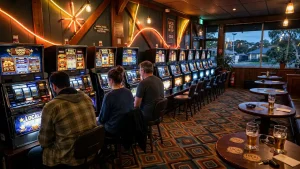
These conditions provide a state-level frame for searches about pokies in NSW, including whether play is available at a particular time. The age requirement and pre-commitment rule do not, by themselves, answer whether a venue is operating, which machines it offers or how a particular session will unfold. A search for pokies open now therefore cannot be answered from eligibility rules alone. Likewise, neither the minimum age nor a loss limit supplies information about a machine’s payout characteristics.
Pre-commitment is best understood as a required planning measure, not a guarantee of protection from harm. A limit can define an intended stopping point, but the existence of a system does not establish that all gambling-related risks are removed. The practical value of setting a boundary depends on treating it as a ceiling on planned losses, rather than as a target to spend or an amount to win back. The legal and practical questions remain distinct: who is eligible to play, what boundary must be set before play, and whether a particular venue is operating are not interchangeable matters.
For NSW poker-machine gambling, the central conditions are therefore clear: participation is restricted to adults aged 18 or older, with identification checks required at venues, and players must set a loss limit before playing through the state’s mandatory pre-commitment systems. These conditions define access and advance planning. They do not establish opening times, local availability or an expected payout, and should not be treated as evidence that gambling can produce a predictable financial result.
Do
- Set a loss limit before playing
- Base session budgets on available bankroll
- Treat loss limits as a ceiling on expenditure
- Verify age eligibility with identification
Don't
- Chase losses to recover money
- Use gambling to cover essential expenses
- Treat loss limits as targets to spend
- Assume eligibility removes venue restrictions
Pokie Mechanics, RTP and What the Evidence Can Establish
A pokie’s outcome is governed by its game mechanics, but those mechanics do not make the result of a particular spin predictable. Every online pokie uses a Random Number Generator (RNG). Each spin is independent: earlier wins or losses do not alter the outcome of the next spin, because the RNG does not keep a record of previous results and adjust what follows.
This independence matters when assessing claims about “hot” or “due” games. A run of losses does not establish that a win is next, just as a recent win does not show that another is less likely. Past outcomes describe what has already happened; they do not provide a reliable forecast of the next spin. A session can therefore differ substantially from what a long-run measure might suggest.
What RTP describes
Return to player, or RTP, is a theoretical measure of how much of the total amount wagered a pokie returns across a very large number of spins. It is not a promise that an individual player will receive that proportion during a session, nor does it specify when a return will occur. A short sequence may produce results that differ markedly from the theoretical rate.
The scale of the measure is important. RTP describes aggregate play over many spins, while a session involves a limited set of outcomes. It cannot be used to infer that a particular bet will be returned, that a win is imminent, or that a game will pay a certain amount on a given visit. Nor does an RTP figure by itself establish which title is the “best paying” option in NSW: that would require comparable, verified figures for the games under consideration, and the measure would still not predict a session’s result.
The distinction also limits what can be concluded from a game’s presentation or a player’s recollection. A sequence that appears unusually generous or unproductive is not, by itself, evidence that the underlying odds have changed. Independent spins remain independent even when their results form a conspicuous pattern.
Progressive jackpots
Progressive jackpot pokies use a shared accumulation mechanism: a small portion of each bet is added to a jackpot that grows over time. This explains how the prize pool can increase as play continues. It does not establish when the jackpot will be won, how likely a particular spin is to trigger it, or what a player can expect to receive in an individual session.
The jackpot amount and the chance of a particular outcome are separate questions. A growing pool is a description of the prize mechanism, not evidence that a win is approaching. Without the relevant game-specific information, the jackpot structure alone cannot support a comparison of expected results across titles.
Limits of a “best” claim
The phrase “best pokies in NSW” can refer to different things: a preferred theme, a game feature, a jackpot format or an expected return. These are not interchangeable measures. The mechanics described here establish how random outcomes, long-run RTP and progressive pools should be understood; they do not rank named games or show which pokies pay best in NSW, in a casino, or in a CBD location.
A sound comparison would require evidence tied to particular games and comparable measurement conditions. Even where an RTP is available, it remains a theoretical long-run figure rather than a session forecast. No conclusion about a particular title’s likely short-term performance follows from the fact that it has an RNG or a progressive jackpot.
These limits have practical consequences for play. Losses do not make a later spin more likely to win, so increasing bets to recover them has no basis in the independence of outcomes. A session budget set in advance can place a boundary on expenditure; chasing losses works against that boundary. RTP and jackpot growth explain features of the game, but neither changes the uncertainty of the next spin.
Online Pokies and Australian Access Restrictions
Online pokies are subject to a different legal framework from poker machines in NSW venues. Under the Interactive Gambling Act 2001, operators based in Australia cannot provide real-money online casino games to people located in Australia. The restriction covers online pokies as well as casino-style table games. It concerns the provider’s conduct; it does not mean that a player faces a fine or criminal prosecution simply for accessing an offshore site.
Offshore platforms occupy a separate, legally uncertain position. It is technically not illegal for an Australian player to use an offshore casino, and a platform may hold a licence from a gambling jurisdiction outside Australia. That licence is not an Australian licence, however, and does not bring the service under Australian regulation. Offshore casino services are actively blocked and enforced against, so technical access should not be treated as evidence that a service is lawful to provide in Australia or that it is reliably available.
Location controls can affect what appears on a platform. An online casino or software provider may use the player’s IP address to determine their apparent country and block access from excluded regions. When a game is region-blocked, it will not appear in the lobby when the platform is accessed from an Australian IP address. A page or game that does not load may also reflect a restriction, rather than a temporary fault; reports of that behaviour should be treated as reports, not as a guarantee about every operator.
Licensing rules outside Australia can also shape game availability. A casino or provider may restrict a title where its own jurisdiction requires that restriction. Some providers have also been reported by specialist reviews as blocking Australian access in anticipation of possible future changes to Australian gambling laws. That is a time-sensitive account of a source’s observation, not proof that every provider applies the same policy. Historical examples include NetEnt’s removal of certain progressive-jackpot games from Australian access in 2016, and region blocking of games from NYX Gaming, later known as Next Gen.
A VPN can make a connection appear to come from another country, but using one to bypass a region block breaches the relevant site’s terms of service and may lead to account suspension. It does not change the player’s physical location or make an offshore casino regulated under Australian law. Nor does it ensure that a blocked game will load or that an account will remain available.
Legal Risks
Using a VPN to bypass region blocks breaches a site's terms of service and may lead to account suspension.
Searches for real-money pokies, no-deposit offers or high betting limits do not establish that a platform is lawful or accessible. A bonus is a contractual offer, not a safeguard: terms can impose wagering requirements, cap cashouts or allow winnings to be voided. Offshore platforms also offer limited avenues for dispute resolution, and funds may not be protected if an operator becomes insolvent. Payment options can vary by region; no particular method should be assumed to work for every Australian account.
Claims about the best-paying online pokies in NSW cannot be substantiated by access conditions alone. A title’s visibility, a promotional offer or a permitted stake does not establish that it will return more to an individual player. Online casino games should not be treated as a source of money for rent or groceries; that expectation is an illusion. Chasing losses or increasing bets to recover them can deepen losses, so gambling should not be used as a financial remedy.
Finding NSW Pokies Near Airports and Other Locations
A request for pokies near an airport or in a central business district is a question about geography, not a measure of what a venue offers. “Near” can refer to different starting points: an airport terminal, a broader airport precinct, a street address or a city-centre landmark. Without a specified origin and a named destination, the word does not establish a meaningful distance.
Airport searches also need to distinguish a venue inside an airport from one elsewhere in the surrounding area. A location described as close to an airport is not necessarily within the airport precinct, and a general reference to an airport does not establish that poker machines are available at the terminal. These are separate claims and should not be treated as interchangeable.
The same distinction applies to searches for pokies near the NSW–Victoria border or in northern NSW. A broad regional label does not identify a particular town, venue or route. A venue’s position relative to a state border may matter to someone travelling across regions, but the label alone cannot show how far away it is or whether it lies on a convenient route.
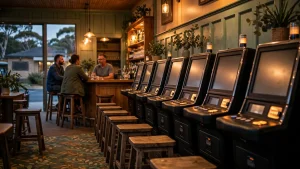
For searches around Sydney’s CBD, the relevant geography also depends on what counts as the centre and how the distance is measured. Straight-line distance, walking distance and travel by road can produce different impressions of proximity. A description such as “near the CBD” is therefore most useful when paired with a specific address and a clear measurement basis. It should not be read as a guarantee that a venue is within walking distance or in a particular part of the city.
Location claims are best separated from claims about machine numbers, opening times or game selection. A nearby venue is not necessarily open at a particular hour, and its location alone says nothing about which machines it has. Those details require separate, venue-specific information. Likewise, a list of locations across NSW cannot be inferred from a broad regional label alone.
This matters particularly for airport travel, where the practical starting point may be a terminal rather than the airport boundary. A distance measured from a terminal entrance could differ from one measured from a nearby road or precinct edge. Unless the starting point and destination are both clear, a proximity description remains imprecise.

The term “near me” is also relative. It changes with the person’s current location, while a general NSW reference covers a much wider area. Neither phrase identifies a fixed venue or distance. A useful location description needs a named place and a stated point of reference; without those, proximity cannot be assessed consistently.
For NSW airport, CBD, border and regional searches alike, geographic wording should be treated narrowly. It can indicate the kind of place being sought, but it does not by itself establish a venue’s exact position or its facilities. Keeping those questions separate avoids turning a broad location label into a claim about access or availability.
NSW Pokies Venues and the Available Machine-Count Evidence
The clearest venue-level comparison established for NSW concerns the number of operational poker machines at clubs. Club Liverpool has the highest operational machine count among clubs in the state. This is a specific distinction within the club category; it does not establish that Club Liverpool has the highest count among every type of venue, or that it is the best place to play.
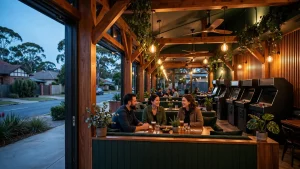
Machine count is a measure of venue scale, not a measure of game quality or likely returns. A larger number of machines does not show that any particular pokie pays more, offers better odds or produces a more favourable result in an individual session. Nor does the distinction identify which titles are installed. No conclusion about a venue’s suitability can be drawn from the count alone.
The label “best pokies venue in NSW” therefore requires a criterion that the machine-count comparison does not supply. It could refer to the number of machines, a preferred game selection, location or other features, but those are separate questions. The established comparison supports only a narrow statement: among NSW clubs, Club Liverpool leads on operational poker-machine numbers. It does not support a general ranking of NSW venues.
This distinction also matters when interpreting venue lists. A list of clubs is not, by itself, a ranking by machine count, and a prominent venue name should not be treated as evidence of a particular machine inventory. The Club Liverpool comparison is useful when the stated criterion is the number of operational machines among clubs; it should not be extended to claims about other venues or categories without comparable information.
Regardless of venue size, poker-machine gambling carries a risk of loss. A larger machine offering does not change that risk or make gambling a reliable source of income. Chasing losses or increasing bets to try to recover them can compound financial harm. A session budget based on available funds is a more controlled boundary, and gambling should not be treated as a means of meeting essential costs.
Poker-machine gambling in NSW is restricted to adults aged eighteen and over. Venues must check identification for this activity; attempting to gamble when underage or otherwise failing to meet the legal requirements can have legal consequences. These access conditions are separate from the machine-count comparison and do not provide evidence about which venue is preferable.
Accordingly, the defensible venue-level conclusion is limited but clear: Club Liverpool has the greatest number of operational poker machines among NSW clubs. That fact can inform a comparison based specifically on club machine count, but it cannot establish a statewide “best” venue or predict a player’s outcomes.
Pokie Opening Hours: What Is and Is Not Verified
There is no basis for treating poker machines in New South Wales as available around the clock. Claims that a venue is open all night or has machines available at any particular time should therefore not be presented as established.
“Open now” is a time-sensitive question, not a fixed description of a venue. A venue’s published business hours may also differ from the hours during which its Electronic Gaming Machines (EGMs) are accessible. Without a current, venue-specific schedule that addresses machine access, neither point establishes that pokies are operating at a particular time.
The distinction matters for searches about 24-hour pokies venues in NSW. A broad statement about the state would imply uniform hours across venues, while a claim about a particular club or casino would require information specific to that venue. Neither can be inferred from the fact that poker-machine gambling is permitted in NSW. Permission to gamble does not establish when a machine room is open.
For a time-sensitive visit, the relevant information is the venue’s own current notice or direct confirmation of machine access, rather than an assumption based on general business hours. Even then, a schedule can indicate expected availability, not guarantee that machines will be accessible at every moment. No specific venue or opening time should be treated as confirmed without that information.
Operating hours are separate from the rules governing access to poker machines. Gambling on them in NSW is restricted to people aged 18 or older. Venues must check identification, and underage gambling can have legal consequences. Opening at a particular hour would not remove that age requirement.
Time spent playing is also distinct from the question of when a venue is open. A session budget should be set in advance according to available funds, and bets should not be increased to recover losses. Chasing losses can extend play without changing the underlying chance of an outcome.
Accordingly, “24-hour” should not be used as a general description of NSW pokies availability.
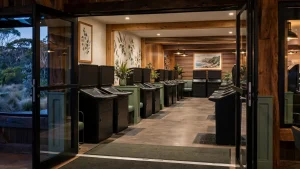
Pokies in Parkes: Limits of the Available Information
A reliable account of pokies in Parkes, NSW, needs to distinguish local venue information from general statements about gambling in the state. Statewide conditions do not establish which Parkes venues have Electronic Gaming Machines (EGMs), how many are operating, or which games are available. Naming a local club or hotel as a place to play without venue-specific confirmation would risk presenting an assumption as a fact.
The same caution applies to descriptions of the “best pokies” in NSW. A statewide label does not show that a particular game is installed in Parkes, and a game’s presence elsewhere would not establish local availability. Nor does the name of a venue, by itself, indicate its machine selection or the conditions under which machines can be used. Those details need to be confirmed for the specific venue and date concerned.
Parkes should also be kept distinct from other NSW locations, including Port Macquarie. Information about one town cannot establish what is available in the other. A broad regional description or a general NSW venue count would not answer whether a particular location has pokies on site.
For practical local information, venue-published details or direct confirmation from the venue are more appropriate than an unverified list. Even then, a listing should be treated as a statement about the venue rather than proof that a particular machine is available at a particular time. No local opening times or machine inventory can be inferred from statewide information.
Poker-machine gambling in NSW is restricted to people aged 18 or older. Venues must check identification for poker-machine gambling; failure to meet the legal age requirement can have legal consequences. Compliance with the age rule does not establish that a venue has machines or that any particular game is offered.
Pokies are gambling, not a dependable source of income. Setting a session budget in advance helps define a limit; losses should not be chased, and increasing bets to try to recover them can deepen losses. The hope that gambling will cover essentials such as rent or groceries is an illusion, not a reliable financial plan. These cautions apply whether gambling takes place in Parkes or elsewhere in NSW.
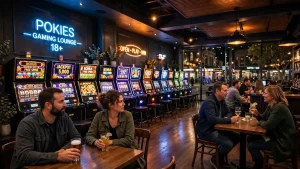
A Parkes-specific answer therefore depends on current, venue-level confirmation. Without it, claims about local venues, machine numbers, particular games or comparative “best” options should not be treated as established.
Crown and NSW Pokies: No Verified Venue Details
The Crown name is associated with a casino operator, but a brand name alone does not establish which poker-machine facilities, games or operating conditions apply at a particular NSW location. Searches for Crown pokies in NSW therefore need to be distinguished from evidence about a specific venue.
The same distinction matters when looking for the “best” pokies room. A ranking would require comparable information about venues and their machine offerings, rather than an assumption based on the operator’s name. A game’s inclusion in a general list of pokies does not establish that it is installed at any given venue.
Questions about a maximum cash payout also require care. A jackpot amount, a machine’s theoretical return and the amount a venue can pay in cash are different matters; one should not be treated as evidence of another. Any claim about a particular machine or payment condition would need to be tied to that machine and the venue’s stated rules.
For physical poker-machine gambling in NSW, the legal age is 18. Venues must check identification, and gambling below the legal age can have legal consequences. NSW also requires pre-commitment systems that let players set a loss limit before playing. These state-level conditions do not establish what machines are available at a Crown-branded venue.
Online access is a separate issue from visiting a casino. Under the Interactive Gambling Act 2001, operators may not provide real-money online casino games, including pokies, to people located in Australia. An offshore website using a Crown-related name would not, by that fact alone, be a lawful Australian online casino. VPN use to get around a site’s regional block breaches its terms and can result in account suspension.
No venue comparison or payout claim should be taken as a reason to raise stakes or chase losses. Gambling is not a dependable way to meet living costs; hopes of using winnings for rent or groceries do not change the risk of losing money. A session budget should be set within available funds, and bets should not be increased to recover losses.
CBD Clubs and Poker Machines in NSW
Interest in clubs with pokies in a NSW central business district is distinct from interest in venues elsewhere in the state. A CBD label describes a location, not the games available inside a club. It does not establish that a particular venue has poker machines, or that its selection is better than another venue’s.
That fact does not make it a CBD venue or provide a basis for comparing games in central areas. Nor does the number of machines establish their likely returns: each pokie’s outcomes are random, and a venue-level count cannot predict what will happen in a session.
In NSW, the legal age for gambling on poker machines is 18. Clubs must check identification for poker-machine gambling; failing to meet the applicable entry requirements can have legal consequences. Mandatory pre-commitment systems also require players to set a loss limit before playing. These conditions apply regardless of whether a club is in a CBD or another part of the state.
A comparison of central-area clubs would need reliable details about each venue’s location and machine offering. The same caution applies to any assumption that a club has a particular title merely because that game is known in Australia.
Self-exclusion is a separate concern from choosing a venue. Anyone considering a break from gambling should avoid treating a change of location as a substitute for support or a considered decision to stop.
If gambling is taking place, a session budget should be set in advance in line with available funds. Losses should not be chased, and bets should not be increased in an attempt to recover them. These precautions do not make outcomes predictable, but they avoid presenting a central location, club setting or machine choice as a way to control them.

Cashless Pokies and Newcastle Searches
Cashless gaming and pokies in Newcastle concern two different questions: how a machine is accessed or paid for, and which local venues offer poker machines. The term “cashless” alone does not identify a particular machine, payment arrangement or venue. Nor does a Newcastle location establish that a machine supports cashless play.
A physical poker machine is distinct from an online pokie. The Interactive Gambling Act 2001 prohibits operators from providing real-money online casino games, including pokies, to people in Australia. That restriction concerns online services; it does not, by itself, describe payment arrangements at physical venues. Cashless gaming should therefore not be treated as evidence that a venue offers online gambling.
There is also no basis for ranking Newcastle venues by machine quality or cashless features. A “best” label would require comparable information about the machines and their operation, not simply a locality or a payment-related term. Club Liverpool’s status as the NSW club with the highest number of operational poker machines does not establish anything about Newcastle venues or cashless systems there.
For physical poker-machine gambling in NSW, the legal age is 18, and mandatory pre-commitment requires players to set a loss limit before play. These conditions apply independently of whether a venue describes a machine or payment process as cashless. Venue identification checks are also relevant to lawful access.
Payment convenience does not alter the financial risk of gambling. A session budget should be set in advance, based on available funds, and losses should not be chased by increasing bets. Cashless access, where offered, would not change the independent outcomes of pokie spins or improve the likelihood of a win.
Accordingly, Newcastle and cashless gaming are not enough to establish a specific venue recommendation. Any claim about a local machine, payment option or venue would need to be tied to current, venue-specific information rather than inferred from the wording used to describe it.
What is pokies region blocking?
Region blocking is when a casino or game provider uses your IP address to identify your location and restricts access based on your country. Blocked games may not appear in the lobby or may fail to load.
Which pokies are geo-blocked from Australia?
Examples include NetEnt’s Mega Fortune and Hall of Gods, as well as NYX Gaming/Next Gen titles such as Foxin’ Wins and Doctor Love. Availability can depend on the casino or provider’s restrictions.
Is there a way around region-blocked pokies?
A VPN can make your digital location appear to be in another country, but it does not change the legal or licensing restrictions that may apply.
Are online casino-style games restricted in Australia?
Yes. The Interactive Gambling Act restricts Australian-based operators from offering online casino games such as pokies, blackjack and roulette to players in Australia. Offshore platforms are not regulated under Australian law, although it is technically not illegal for Australian players to use them.