
Check what opening-hour searches can actually prove
Venue schedules, gaming-facility access and current availability are separate questions, while the article outlines limits of the available evidence.
What Canberra’s Opening-Hours Searches Can—and Cannot—Establish
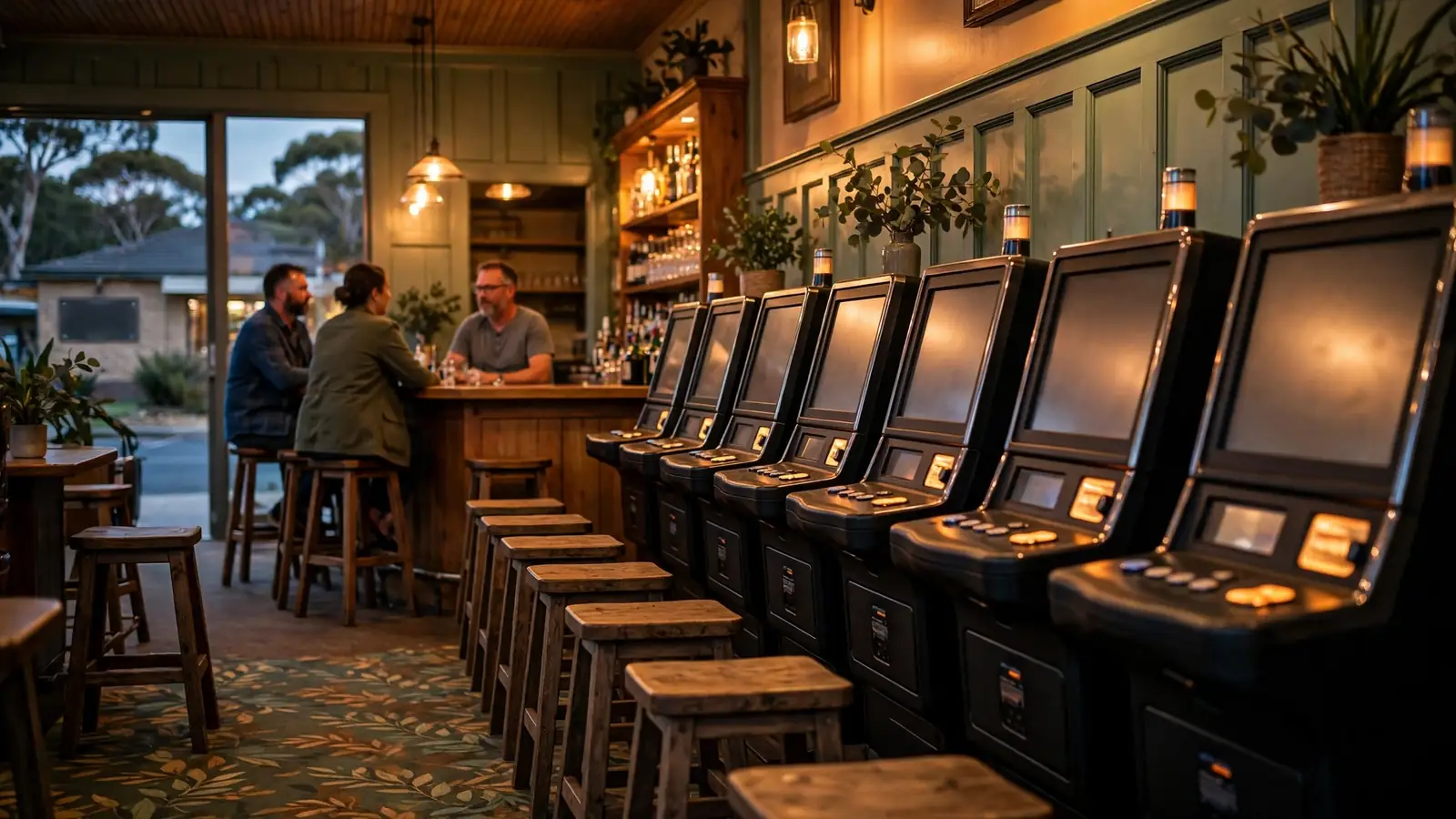
Whether a Canberra venue is open at a particular moment is a venue-specific, time-sensitive question. A general description of pokies in Canberra cannot establish that a particular room is operating now, nor that its machines are available throughout the venue’s stated trading hours. Opening times may also differ from the hours during which gaming facilities are accessible. These distinctions matter when someone is looking for an early-morning or late-night option: a venue’s general operating schedule does not, by itself, confirm the availability of pokies at that time.
The phrase “open now” has meaning only in relation to a particular venue and the time at which its status is checked. A result that was accurate earlier may no longer describe current conditions. Likewise, searches for Canberra pokies open early, open late, or available at a particular morning hour express different timing needs; they cannot be treated as proof that any venue meets them.
A useful distinction is between a venue’s opening hours and access to its gaming facilities. A venue may provide several services, and their availability need not be identical. A broad label such as “open” therefore does not necessarily answer whether pokies are operating at that time. Establishing that would require information tied to the named venue and the relevant date and hour. Without that, a precise answer would imply certainty that the wording alone cannot support.
Casinos listed by licence
Choosing an online pokies site from Canberra calls for checking the details that matter to you, including licensing and payment terms. This list offers a concise starting point based on the information available for each operator.
-
Roby Casino
- License
- Curacao eGaming (Roby Games Ltd)
Roby Casino is listed with a Curaçao eGaming licence held by Roby Games Ltd.
-
Neospin
- License
- Curacao Gaming Control Board OGL/2023/176/0095 (Hollycorn N.V.)
Neospin is listed with Curaçao Gaming Control Board licence OGL/2023/176/0095, held by Hollycorn N.V.
-
WinSpirit Casino
- License
- Curacao eGaming OGL/2024/923/0383 (Antillephone N.V.)
- Min. deposit
- A$30
WinSpirit Casino is listed with an Antillephone N.V. Curaçao eGaming licence, OGL/2024/923/0383. Its minimum deposit is A$30.
-
Vegaz Casino
- License
- Curacao OGL/2024/1335/0780
- Min. deposit
- EUR 20
Vegaz Casino is listed with Curaçao licence OGL/2024/1335/0780. Its minimum deposit is EUR 20.
-
House of Pokies
- License
- international iGaming licence – jurisdiction not named in the source
- Payout speed
- PayID 1-24 hours
- Min. deposit
- A$30 (PayID from A$10)
House of Pokies lists an international iGaming licence, but the jurisdiction is not named in the available information. PayID withdrawals are stated as taking 1–24 hours; the minimum deposit is A$30, or A$10 when using PayID.
-
DragonSlots Casino
- License
- Curacao Gaming Authority (Jumpman Gaming Ltd)
DragonSlots Casino is listed with a Curaçao Gaming Authority licence held by Jumpman Gaming Ltd.
-
Ricky Casino
- Payout speed
- crypto under 1 hour, PayID 1-3 business days
- Min. deposit
- A$20 (A$30 to qualify for the bonus)
Ricky Casino lists crypto payouts under an hour and PayID payouts in 1–3 business days. Its minimum deposit is A$20, rising to A$30 to qualify for the bonus.
-
Wild Tokyo
- License
- Curacao
- Payout speed
- crypto 30-60 minutes, fiat 1-5 days
- Min. deposit
- A$10
Wild Tokyo lists a Curaçao licence and a minimum deposit of A$10. Its stated payout times are 30–60 minutes for crypto and 1–5 days for fiat.
-
Rollero Casino
- License
- Curacao Gaming Control Board OGL/2023/176/0095 (Hollycorn N.V.)
Rollero Casino is listed with Curaçao Gaming Control Board licence OGL/2023/176/0095, held by Hollycorn N.V.
-
Lucky Dreams
- License
- Curacao
- Min. deposit
- A$20 (POLi)
Lucky Dreams lists a Curaçao licence and a minimum deposit of A$20 when depositing with POLi.
This limitation also applies to requests for a particular early start or late finish. A stated schedule, where one is available, has to be read for the relevant facility and period rather than treated as a permanent guarantee. Public holidays, temporary changes, and operational arrangements can make a time-sensitive status different from a general description. The careful distinction is not between one kind of Canberra venue and another, but between a general indication of trading hours and a current, venue-specific confirmation.
The legal age for gambling in Australia is 18, including for pokies. That threshold applies regardless of whether play is sought at a land-based venue or online. Age eligibility does not establish that a venue is open, and an opening-time listing does not change the age requirement. These are separate questions: one concerns when access may be available, while the other concerns who may legally gamble.
Responsible-gambling tools can help structure participation where gambling is available. Deposit limits set a boundary on money placed into an account or gambling activity; loss limits define a stopping point based on losses; and session time limits place a boundary on the duration of play. Self-exclusion is a separate option for restricting access. These tools are not evidence of a venue’s opening schedule, and their existence does not indicate that any particular location is operating.
The distinction is important because timing can shape how a gambling decision is made. An early or late opening may be sought for practical reasons, but availability alone says nothing about whether play is suitable or within an individual’s limits. Limits and exclusion options address participation, not venue status. Keeping those questions separate avoids treating a schedule as an endorsement or as evidence about the conditions of play.
In practical terms, a claim about Canberra pokies being open at a particular hour needs a current reference to a named venue and its gaming facilities. A general city-level description cannot substitute for that detail. Nor should a broad indication of venue activity be read as confirmation that machines are operating. The most accurate account is therefore limited: opening status is specific to a place and a time, while the age requirement and responsible-gambling tools apply more generally.
What the Evidence Says About Pokie Returns and Randomness
A pokie’s title does not, by itself, establish how much it returns at a particular venue. The same named game may be configured with different return-to-player (RTP) settings, according to a specialist review discussing provider options. Where that option exists, identifying the game is not enough to determine its return percentage: the setting selected for the particular installation also matters.
RTP describes a theoretical proportion of stakes returned over extended play, not a forecast for an individual session. It cannot show what a particular person will win or lose, or when a return might occur. A figure attached to a game name may therefore be incomplete if it does not identify the relevant setting and the context in which that figure applies. Without those details, comparisons between venues based only on titles or advertised game descriptions are not well established.
This distinction matters when assessing claims about the best-paying pokies in Canberra or elsewhere. A ranking based on game names alone cannot demonstrate which installation has the higher return setting. Nor does a familiar title establish that the same configuration is used at every venue where the game appears. The available information supports the possibility of variation, not a claim about the settings at any particular Canberra venue.
The word “best” also depends on what is being compared. A higher theoretical RTP, if accurately established for a specific configuration, would describe a long-run statistical property; it would not mean that the game is more likely to pay during a short visit. Game titles, visual themes and past outcomes do not replace information about the applicable setting. In the absence of that information, a venue-level comparison cannot be reached from the name of a pokie alone.
Each spin is a separate random event determined by a Random Number Generator (RNG). The outcome of one spin does not determine the outcome of the next. A recent win does not establish that another is due, and a run of losses does not make a win imminent. Past results may describe what has happened in a session, but they do not reveal the result of the next independent event.
That independence is also why short sequences can differ markedly from a game’s theoretical return. A theoretical measure is not a schedule of payouts or a promise that returns will be distributed evenly across sessions. It cannot be used to infer that a particular machine is “due” to pay because it has not produced a win recently, or that a machine is more generous because it has just paid out. Such conclusions confuse a long-run measure with the uncertain results of individual plays.
For people comparing pokies in Canberra, CBD venues or the city more broadly, the evidence needed to support a meaningful return comparison would have to be tied to the specific game configuration in question. A title shared across locations is not sufficient. General statements about a provider’s games cannot establish the setting chosen for a particular installation, and a description of RNG-based play cannot identify which venue has the highest theoretical return.
The same limits apply to a search for “best pokies in Canberra 2026”: a confident ranking would require information that connects a particular game and its selected RTP setting to a particular venue. The game’s name alone supplies neither link. Independent random outcomes further prevent a theoretical return from serving as a prediction of session results. These points support a cautious distinction between what a game may be configured to return over extended play and what any individual spin will produce.
The Legal Limits on Online Pokies in Australia
Pokies played at a physical venue and real-money pokies offered online fall into different legal settings. A search for online play associated with Canberra does not make the service a local, land-based option. Under the Interactive Gambling Act 2001, companies must not provide real-money online casino games, including pokies, to people in Australia. No Australian licences for online casinos have been issued, so there is no Australian-licensed online casino.
This distinction matters for searches involving deposits, bonuses or high betting limits. Those features do not change the legal status of an online casino service. Nor does a Canberra connection in a site’s wording establish that the operator is based in the city or authorised under Australian law. Real-money online pokies are not a domestic casino product simply because they can be accessed through a phone or computer in Canberra.
The law’s primary target is the operator, rather than an individual player. Australian players are not subject to a penalty merely for playing on an offshore site that accepts them. That does not make the site an Australian-licensed service or provide the protections associated with a domestic online-casino licence. The Australian Communications and Media Authority (ACMA) enforces the Act and blocks access to illegal offshore gambling sites; internet service providers must comply with its blocklist. As a result, access may be disrupted, and a site accepting Australian customers should not be treated as evidence that it is lawful to provide those services here.

A further practical limit concerns disputes over winnings. If an offshore casino refuses to pay, an Australian player has no legal recourse in Australia against that casino. This is distinct from whether a player faces liability under the Act: the absence of player liability does not create a domestic route for recovering funds or make an offshore operator accountable to Australian regulators.
The same caution applies to promotions described as a no-deposit offer. A bonus label does not establish that an online casino is licensed in Australia, and the existence of an offer does not remove the legal restriction on operators providing real-money casino games to people in the country. Such claims should not be read as proof of a locally regulated service.
BetStop requires particular care in this context. It applies to Australian-licensed operators and does not bind offshore sites. Because no Australian-licensed online casino exists, BetStop should not be understood as a safeguard that can compel an offshore casino to block access or honour an exclusion request. The distinction between domestic protections and offshore services is material when assessing what a restriction can actually do.
Accordingly, “online pokies” and “pokies in Canberra” should not be treated as interchangeable descriptions. The former refers to a service prohibited for operators to provide to people in Australia; the latter may also refer to land-based play, which is a separate setting. A location in a search phrase, a claimed bonus, or a stated betting limit cannot establish that an online casino has Australian authorisation.
Legal Warning
Under the Interactive Gambling Act 2001, it is prohibited for companies to provide real-money online casino games, including pokies, to people in Australia.
Pokies Near Canberra Airport: What Can Be Verified
A reference to pokies near Canberra Airport is a location claim, not confirmation that a venue exists there or that it offers gaming machines. The same distinction applies to descriptions such as “at the airport” and “near the airport”: they can refer to different places, and neither phrase establishes what facilities are present. No Canberra Airport venue or nearby pokie offering can be identified with confidence here.
The boundary between an airport location and its surrounding area also matters. A result described as near the airport could concern a separate location, rather than a facility within the airport itself. Without a specific venue and reliable details about its location and gaming-machine operations, those descriptions should not be treated as interchangeable. Nor does a broad reference to Canberra establish that a venue is in the airport area.
This limits what can be concluded from searches for pokies at Canberra Airport, near the airport, or in nearby parts of the city. Such wording expresses a desired location; it does not verify a venue’s existence, its proximity, or whether it has pokies. The same caution applies to broader descriptions of north Canberra or the Canberra area: a geographic label alone cannot establish an individual venue’s facilities.
A reliable location claim would need to connect a named venue with a precise location and evidence that gaming machines are operated there. These are separate points. A venue’s presence in an area would not, by itself, show that it has pokies; evidence of gaming machines would not, by itself, establish that the venue is at the airport. Keeping the claims separate prevents a general location reference from being mistaken for confirmation of a particular facility.
The wording “near Canberra” is also too broad to settle an airport-specific question. It may indicate the city or surrounding region without conveying a meaningful distance from the terminal or airport boundary. Likewise, a reference to Canberra’s central business district does not establish an airport-area connection. Location terms need to be read as descriptions, not as proof of a venue’s position or offerings.
Accordingly, claims about pokies within Canberra Airport or in its immediate vicinity remain unconfirmed. This is not evidence that no such venue exists; it is a limit on what can responsibly be stated. No specific airport-area venue, machine offering, or exact proximity can be presented as established. The distinction is important wherever a location description could otherwise create the impression that pokie access at the airport has been verified.
Venue Reporting and Responsible-Gambling Duties
Venue-level safeguards provide a more concrete basis for assessing pokie operations than broad claims about which Canberra location is “best”. They describe duties attached to gaming-machine operations, not a ranking of venues or confirmation that any particular club or hotel has machines.
A report published by regionriverina.com.au describes a requirement, commencing on 1 July, for venues operating more than 20 gaming machines to have a dedicated responsible gambling officer (RGO) on duty whenever those machines are running. The officer’s presence is therefore linked to machine operation, rather than simply to the venue being open. The threshold also matters: the reported duty applies to venues above it, not automatically to every place that offers pokies.
The same report says venues were given a one-month grace period to take down signage and introduce the officer role. That transitional period is relevant when interpreting the reported change, but it does not establish whether a particular Canberra venue has completed the required steps or whether its machines are operating. Those details require venue-specific, current information.
The report also describes a gambling incident register for venues. It is intended to document occurrences, including situations in which a patron’s behaviour suggests exposure to gambling harm. Such a register is a record-keeping measure: it can support the tracking of incidents and responses, but its existence alone does not demonstrate how a venue handles a particular situation or how effective its practices are.
Signage is another part of the venue environment. Directions to gaming lounges should not be placed where they are within sight of ATMs or EFTPOS terminals; likewise, directions to ATMs should not be visible from gaming machines. These restrictions concern the placement of prompts around gambling and access to money. They do not, by themselves, establish which venues have machines or how those venues meet other responsibilities.
For someone comparing Canberra venues, the practical distinction is between a stated operational duty and evidence about an individual site. The reported RGO threshold and incident-register requirement describe obligations at venue level, while the signage restrictions address the surrounding environment. None of these provisions supplies a verified list of Canberra pokies venues, identifies which ones exceed the machine threshold, or supports a “best venue” judgement.
A reliable comparison would require current, venue-specific details, such as whether the location operates gaming machines and what arrangements apply while they are in use. General reporting about safeguards can clarify the standards being discussed, but it cannot substitute for that local evidence. The responsible-gambling duties are therefore useful context for evaluating venue claims, not proof of a particular Canberra club’s status or performance.
Why 24-Hour Availability Cannot Be Confirmed
A claim that pokies operate around the clock is more specific than a claim that a venue is open late. It concerns the hours during which gaming machines are available for play, not simply whether a building, bar or reception area remains accessible. Those details should not be treated as interchangeable.
For Canberra, round-the-clock pokies availability cannot be stated as an established fact. A venue name, a general description of its facilities or an indication that it opens late would not, by itself, confirm that its machines operate continuously. The claim requires clear, current information about gaming-machine operating hours. Without that, describing a venue as a 24-hour pokies venue would go beyond what can be substantiated.
The distinction matters when opening hours are published for a venue as a whole. Such hours may refer to particular services or parts of the premises, rather than the gaming area. Even a listing that gives an opening time does not necessarily specify when pokies can be played. A dependable statement about continuous operation therefore needs to identify the relevant venue and relate its hours specifically to gaming machines.
The word “24-hour” also implies uninterrupted availability, rather than extended hours or late-night access. A claim of continuous operation should not be inferred from a single time listing or from general descriptions of a venue. If hours change, an older statement may no longer describe current arrangements; a precise claim needs information that is both specific and current.
This standard does not establish that no Canberra venue operates pokies at all hours. It means only that continuous operation cannot responsibly be confirmed without venue-specific information about machine hours. The same distinction applies to wording that combines a 24-hour claim with “open now”: current access and continuous operation are separate claims, and neither follows automatically from the other.
Pokies are a form of gambling subject to Australia’s minimum legal age of 18. Responsible-gambling tools include deposit and loss limits, session time limits, and self-exclusion. These safeguards do not establish a venue’s hours, but they are relevant context whenever access to gambling is discussed. A description of availability should remain precise: unless the gaming hours themselves are confirmed, “24-hour” is not a reliable description of Canberra pokies.
Crown Casino Searches and the Limits of the Available Information
A reference to Crown alongside Canberra does not, by itself, establish that a Crown venue operates in the city. Nor does it confirm that pokies associated with Crown can be found there. The wording may combine a venue name with a location, but that combination is not evidence of a local venue, its facilities or its gaming-machine offerings.
This distinction matters when interpreting descriptions of a “Crown” pokies room in Canberra. A room cannot be assessed as the best option without first establishing that the venue exists in the stated location and that it offers the machines being discussed. No venue-specific conclusion follows from the name alone. In particular, it would be unwarranted to rank a supposed room, describe its atmosphere or compare its facilities with other Canberra venues.
The same limit applies to questions about maximum cash payouts. A venue-specific payout figure would require reliable information about the relevant machines and the conditions under which prizes are paid. The Crown–Canberra association does not supply those details. It therefore cannot support a stated maximum, a comparison between rooms or an assurance about how a particular prize would be handled. An unsupported figure could give a misleading impression of what is available locally.
The word “Crown” also cannot be used as a shortcut for identifying a particular game or machine configuration. Even if a game or brand is familiar, that does not establish that it is installed at a Canberra venue. Venue presence, machine selection and payout conditions are separate claims, each requiring its own evidence. Conflating them turns a location label into details it does not prove.
Accordingly, the defensible position is narrow: the association between Crown and Canberra does not verify a Crown casino in Canberra, a local Crown pokies room, or the machines and cash-payout arrangements that such a room might have. This is not proof that no such venue or offering exists; it is a limit on what can be concluded without dependable, location-specific information.
For a comparison to be meaningful, it would need to identify a real venue and substantiate the particular features being compared. Without that basis, terms such as “best room” remain unevidenced descriptions rather than assessments grounded in verified venue details. Likewise, a maximum payout cannot be inferred from a venue name or from the use of the word “pokies.” Claims about a Canberra Crown venue should therefore be treated as unconfirmed unless supported by clear information tied to that location.
Canberra CBD Clubs and Gaming-Machine Reporting
Interest in pokies at Canberra clubs often centres on venue-level safeguards rather than the features of any particular game. Reporting duties describe how a qualifying venue must respond to gambling-related concerns; they do not establish which clubs in the central business district operate gaming machines or what machines they offer.
A report by regionriverina.com.au describes a requirement for venues with more than 20 gaming machines to have a dedicated responsible gambling officer (RGO) on duty while those machines are operating, with the change applying from 1 July. The threshold is based on the number of machines at a venue, and the duty is tied to their operating hours. It is therefore a venue-operating requirement, not a claim that every club has an RGO on duty at all times.
The same report describes a gambling incident register for recording relevant occurrences. These include situations in which a patron’s behaviour indicates possible gambling harm. Such a register creates a record of incidents for the venue; it is distinct from the random-number process that determines an individual pokie spin. The two subjects concern different levels of activity: one concerns venue reporting and response, while the other concerns game mechanics.
For searches about Canberra CBD clubs, these requirements offer a limited but concrete way to understand responsible-gambling administration. They do not, by themselves, identify a club, confirm its machine count, or provide a basis for comparing venues. A club’s proximity to the CBD or its description as a social venue is not evidence of its gaming-machine arrangements.
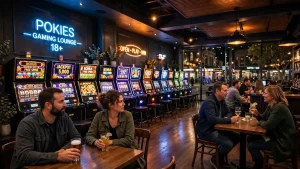
Self-exclusion is a responsible-gambling tool in Australia, alongside deposit, loss and session-time limits. Its general availability should not be confused with the incident-register duty: self-exclusion concerns a person’s ability to restrict their own gambling, while the register concerns occurrences that a venue records when signs of harm arise. The stated reporting requirements do not specify how a particular Canberra club handles self-exclusion requests, so no venue-specific process follows from them.
Accordingly, the defensible distinction is between a reported obligation applying to venues above a machine-count threshold and claims about individual clubs. The former can be described without implying that any named CBD club meets the threshold; the latter requires venue-specific information. This keeps responsible-gambling reporting separate from rankings or claims about the “best” pokies, which cannot be inferred from these administrative duties.
Pokies in Parkes: No Verified Venue Details
Parkes is a Canberra suburb, but the place-name alone does not establish that a particular venue there has pokies. A location reference and a claim about gaming-machine facilities are separate matters: the former does not confirm the latter. Accordingly, Parkes should not be treated as a confirmed pokie destination on the strength of its name appearing alongside Canberra.
This distinction matters when comparing local options. A venue’s existence would not, by itself, show that it operates pokies; nor would a general reference to Canberra establish that a named facility is in Parkes. Claims about a venue’s facilities should therefore be tied to that venue, rather than inferred from a suburb label or a broad Canberra reference.
The same caution applies to descriptions such as “best pokies” in the area. A ranking requires evidence about the games or venues being compared. General information about pokies cannot fill that geographic gap.
Pokies are subject to responsible-gambling safeguards, including tools such as deposit limits, loss limits, session time limits and self-exclusion. Those measures describe ways gambling can be managed; they do not establish which facilities are available at a particular address. Likewise, the rules applying to a venue’s operation do not prove that a venue in Parkes has machines.
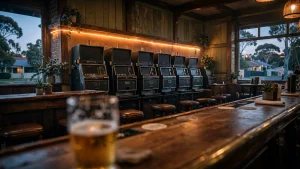
A further distinction is between a physical location and online gambling. The Interactive Gambling Act 2001 prohibits operators from providing real-money online casino games, including pokies, to people physically in Australia. This legal position does not identify local venues or their machine offerings.
Parkes can therefore be discussed as a Canberra location, but that geographical description should not be mistaken for confirmation of a venue, its pokies or its suitability for comparison with other locations.
Cashless Pokies and the Newcastle Search
“Cashless pokies” can refer to machines funded without inserting cash, but that label alone does not establish what payment arrangements a particular venue provides. Canberra-specific wording likewise does not confirm that a local venue offers cashless play. A machine’s payment system is a venue-level feature; it cannot be inferred from the name of a payment service used elsewhere.
PayID operates through Australia’s New Payments Platform and enables transfers using an email address, mobile number or ABN. For an online deposit, PayID must first be linked to a bank account. Those transfer functions do not show that a physical gaming venue accepts PayID, connects it to a pokie, or operates a cashless gaming system. Nor does a payment method establish a game’s return or fairness.
The Canberra–Newcastle wording raises a separate location question. Mentioning both places does not identify a Newcastle venue relevant to Canberra, or establish that any such venue offers cashless pokies. Location and payment arrangements require separate, venue-specific confirmation; they should not be inferred from combined place names.
Real-money online casino games, including pokies, are prohibited services when offered to people in Australia, and no Australian-licensed online casino operates. PayID’s presence in online payment descriptions does not alter that legal position. BetStop applies to Australian-licensed operators and does not bind offshore sites, so its protections should not be assumed to cover them.
Accordingly, cashless play in Canberra and a Newcastle venue connected to Canberra are distinct claims. Neither follows from PayID’s role in bank transfers. A precise description of a venue’s payment arrangements would need to identify the venue and the system it actually uses; general payment terminology cannot supply those details.
What is the legal age for online gambling in Australia?
You must be at least 18 to gamble in Australia, including online.
Are online pokies legal for Australian players?
Australian law prohibits companies from offering real-money online pokies to residents without a domestic licence, and no such licences have been issued. The law targets operators, not players, so Australians can legally play on offshore sites that accept them, but they have no legal recourse in Australia if a site refuses to pay.
What does “wagering requirement” actually mean?
It is the amount you must wager before bonus winnings can be withdrawn, usually expressed as a multiple of the bonus or deposit-plus-bonus amount. For example, a $500 bonus with a 40x requirement means $20,000 in bets; at 35x on a $500 deposit plus a $500 bonus, it means $35,000.
Do PayID deposits qualify for bonuses?
Yes. PayID is treated like any other qualifying deposit method at the recommended sites.