
Assessing Online Keno Claims in Australia
A practical look at legal status, game descriptions, offshore protections, bonuses and what the available evidence does—and does not—show.

Keno Online in Australia: The Legal Context
The legal position turns on the operator and the service being offered, rather than on whether a site describes its game as keno. Under the Interactive Gambling Act 2001, providing real-money online casino games to people located in Australia is prohibited. The Act applies to online casino-style services, including games offered through an offshore website; a foreign location or licence does not make a service lawful to provide to Australian customers.
No Australian licence is available for an online casino. Consequently, there is no locally licensed online casino offering real-money casino keno. A site’s use of Australian currency, local payment options or Australian-facing language does not alter the legal status of the service. Nor does the word “keno” by itself determine the classification: the relevant question is whether the product is being provided as a real-money online casino game to people in Australia.
This distinction matters when interpreting descriptions such as “online casino keno” or “keno casino.” Such phrases may refer to a casino-style game on a website, but they do not indicate that the operator is authorised under Australian law. In this market, the absence of a domestic licensing route is not a minor qualification to a list of otherwise regulated choices. It means that real-money online casino services are not licensed for local provision.
Casinos listed by licence
Choosing an online casino for keno involves checking both whether keno is available and whether the operator’s terms suit you. The details below are limited to the information provided, so confirm the game selection and current terms directly with each casino.
-
Roby Casino
- License
- Curacao eGaming (Roby Games Ltd)
Roby Casino is listed with a Curaçao eGaming licence held by Roby Games Ltd. No keno, payment, or deposit details were provided.
-
Neospin
- License
- Curacao Gaming Control Board OGL/2023/176/0095 (Hollycorn N.V.)
Neospin is listed with a Curaçao Gaming Control Board licence, OGL/2023/176/0095, held by Hollycorn N.V. No keno or payment details were provided.
-
WinSpirit Casino
- License
- Curacao eGaming OGL/2024/923/0383 (Antillephone N.V.)
- Min. deposit
- A$30
WinSpirit Casino is listed with a Curaçao eGaming licence, OGL/2024/923/0383, held by Antillephone N.V. Its stated minimum deposit is A$30; no keno details were provided.
-
Vegaz Casino
- License
- Curacao OGL/2024/1335/0780
- Min. deposit
- EUR 20
Vegaz Casino is listed with Curaçao licence OGL/2024/1335/0780 and a minimum deposit of EUR 20. No keno or payment details were provided.
-
House of Pokies
- License
- international iGaming licence – jurisdiction not named in the source
- Payout speed
- PayID 1-24 hours
- Min. deposit
- A$30 (PayID from A$10)
House of Pokies lists an international iGaming licence, though the jurisdiction is not named in the source. PayID withdrawals are stated as taking 1–24 hours; the minimum deposit is A$30, or A$10 with PayID.
-
DragonSlots Casino
- License
- Curacao Gaming Authority (Jumpman Gaming Ltd)
DragonSlots Casino is listed with a Curaçao Gaming Authority licence held by Jumpman Gaming Ltd. No keno, payment, or deposit details were provided.
-
Ricky Casino
- Payout speed
- crypto under 1 hour, PayID 1-3 business days
- Min. deposit
- A$20 (A$30 to qualify for the bonus)
Ricky Casino lists crypto withdrawals as taking under an hour and PayID withdrawals as taking 1–3 business days. Its minimum deposit is A$20, or A$30 to qualify for the bonus.
-
Wild Tokyo
- License
- Curacao
- Payout speed
- crypto 30-60 minutes, fiat 1-5 days
- Min. deposit
- A$10
Wild Tokyo is listed with a Curaçao licence. Its stated minimum deposit is A$10, with withdrawals taking 30–60 minutes for crypto and 1–5 days for fiat.
-
Rollero Casino
- License
- Curacao Gaming Control Board OGL/2023/176/0095 (Hollycorn N.V.)
Rollero Casino is listed with a Curaçao Gaming Control Board licence, OGL/2023/176/0095, held by Hollycorn N.V. No keno or payment details were provided.
-
Lucky Dreams
- License
- Curacao
- Min. deposit
- A$20 (POLi)
Lucky Dreams is listed with a Curaçao licence and a minimum deposit of A$20 via POLi. No keno details were provided.
The Act is directed at the businesses that provide prohibited interactive gambling services. It does not impose a corresponding offence on an individual merely for playing at an offshore site. That difference between operator conduct and player liability should be stated precisely: the prohibition on provision is not a statement that every player commits an offence by accessing a site. Equally, the absence of player liability does not amount to approval of the operator or make the service locally regulated.
The practical setting is shaped by enforcement as well as by the statute. The Australian Communications and Media Authority (ACMA) is the principal domestic regulator responsible for enforcing the Interactive Gambling Act. It can take action against prohibited services and blocks access to illegal offshore gambling sites. Internet service providers are required to comply with ACMA’s blocklist. Blocking is an enforcement measure, not a form of licensing or certification; a site that remains reachable, or becomes reachable through a change in its address, is not thereby authorised.
This framework also explains why “best” is not a straightforward legal category for real-money online keno in Australia. A ranking can compare services as commercial offerings, but it cannot turn an offshore casino into an Australian-licensed one. In the absence of domestic online casino licences, a claim that a site is the best locally regulated keno casino would misstate the market’s legal structure. The search for a “best online casino keno” option therefore needs to be separated from the question of lawful provision: the former is a promotional or comparative label, while the latter is determined by the Act and its enforcement.
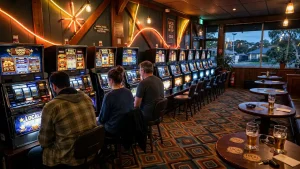
Keno can also appear in settings other than an online casino. The legal conclusion above concerns real-money interactive gambling services provided online to people in Australia; it should not be taken as a complete account of every form of keno or every venue-based arrangement. Conversely, changing the label of an online casino game does not, on its own, remove it from the rules governing online casino services.
The resulting position is specific. Operators may not provide real-money online casino games to people in Australia, and no Australian-licensed online casino exists. ACMA enforces the statutory regime, including through website blocking. The law’s focus on operators must be kept distinct from the position of individual players, but that distinction does not create a locally licensed market or make an offshore casino an approved Australian service.
Real-Money Play and the Limits of Offshore Protection
The central risk in real-money keno at an offshore casino is not limited to the possibility of losing a stake. If a service refuses to pay winnings, Australian players have no legal recourse in Australia to compel payment. That leaves a material gap between the apparent terms displayed on a site and the practical ability to enforce them locally. A promise to resolve complaints or honour a balance does not, by itself, provide a domestic remedy when a dispute arises.
No Legal Recourse
If an offshore service refuses to pay winnings, Australian players have no legal recourse in Australia to compel payment.
This distinction matters when considering online casino keno rules. A site may set out procedures for account verification, withdrawals, cancelled bets or disputed results, but those terms are not equivalent to protection under an Australian casino licensing system. The existence of written rules can clarify what the operator says it will do; it cannot remove the difficulty of seeking redress in Australia if the operator does not comply. The same caution applies to statements that a casino is “trusted” or offers secure real-money play: such descriptions do not establish that an Australian authority can intervene on a player’s behalf.
The risk is especially direct where winnings are withheld. A player may be left relying on the operator’s own complaint process, with no domestic legal route to require payment. This does not establish that every offshore operator will refuse a valid withdrawal. It does establish that the consequences of a disagreement are different when domestic recourse is unavailable. Any assessment of real online casino keno therefore needs to distinguish the chance of an adverse outcome from the remedies available after it occurs.

Account conditions can add further uncertainty. Verification requirements, withdrawal procedures and restrictions in an operator’s terms may affect whether a balance can be cashed out. Identity and address documents should be verified before a first withdrawal is attempted; waiting until funds are pending can expose a player to delays or a dispute over whether the account meets the stated requirements. This is a practical precaution, not a guarantee that an offshore service will pay. The absence of an Australian remedy remains relevant even when an account has been verified.
Responsible-gambling controls also need to be considered separately from payment protection. Deposit limits, loss limits, session time limits and self-exclusion are standard tools in gambling settings. Their presence on a site may help define how play can be restricted, but it does not establish that an offshore operator is subject to Australian oversight or that the controls can be enforced through Australian institutions. Nor does a tool’s label prove how it works in practice. A control should not be treated as a substitute for a domestic safeguard that is unavailable.
BetStop has a narrower scope: it applies to Australian-licensed operators and does not bind offshore sites. It therefore cannot be assumed to prevent access to an offshore casino or to impose a restriction on such a service. This distinction is important when self-exclusion is being considered. A person who has excluded themselves through an Australian system should not infer that the exclusion automatically applies across offshore gambling accounts.
Age is another boundary condition. The legal age for gambling in Australia, including online pokies, is 18. That threshold does not resolve the separate question of whether an offshore keno service provides an effective age check, or whether its account controls are reliable. Age eligibility and the availability of legal recourse are distinct matters.
Searches for keno casino real-money play, including crypto-funded options, can make the transaction appear straightforward: select a game, stake funds and request a withdrawal. But ease of access says little about what happens if terms are disputed or winnings are not paid. Free-play versions avoid a cash stake, but their existence would not answer the protection question for real-money play. The decisive issue is the limited domestic remedy available when an offshore operator does not honour a claim.
Do
- Verify identity and address documents before the first withdrawal
- Distinguish between the chance of an adverse outcome and available remedies
- Treat responsible-gambling tools as aids rather than domestic safeguards
Don't
- Assume written site rules are equivalent to Australian licensing protection
- Rely on "trusted" labels as a guarantee of Australian authority intervention
- Infer that BetStop exclusions automatically apply to offshore accounts
Assessing Casino Sites Without Treating Payment Support as Proof
Descriptions of online casinos can combine several distinct claims: that a service offers keno, that it accepts a particular payment method, and that its games or business practices meet some standard. These claims require separate assessment. A payment option establishes only that the site says it can process a payment by that route; it does not establish that the service is lawful, that a game is fair, or that information about game returns is complete.
That distinction matters in Australia. The Interactive Gambling Act 2001 prohibits operators from providing real-money online casino games to people in Australia, and no Australian-licensed online casino exists. A site’s availability or payment facilities do not change that position. Nor should a list labelled “best keno casino sites” be treated as evidence that the services named are approved or protected in Australia. Rankings and promotional descriptions are not substitutes for regulatory status.

What a payment option actually shows
PayID is an alias system connected to the New Payments Platform (NPP). It allows a transfer to be addressed using an email address, mobile number or ABN. The NPP is supported by all major Australian banks and uses end-to-end encryption. Those properties describe the payment infrastructure; they do not certify the recipient business or the purpose for which a transfer is made.
Using PayID for real-money gambling at an online casino requires linking PayID to a bank account first. Even where a site displays PayID, that fact alone does not establish that a deposit will be accepted, that a withdrawal will be processed, or that the operator’s account terms are clear. A specialist affiliate review characterises PayID as being handled like other qualifying deposit methods on the sites it covers. That is a claim about the review’s coverage, not a general rule applying to all services or a sign of regulatory approval.
The same separation applies to Bitcoin. A label such as “Bitcoin casino with keno” identifies a claimed payment option, not a licence, a verified game, or a safeguard for funds. Payment terminology should therefore be read narrowly and checked against the operator’s own current terms rather than treated as an overall quality rating.
Reading claims about games and transparency
A site may advertise keno alongside pokies or describe itself as one of the online casinos with keno. Those descriptions concern its catalogue as presented by the operator. They do not, by themselves, establish which games are available to Australian users, whether the displayed rules are complete, or how the operator handles disputes. “Live keno” is also a product description, not evidence that a game has been independently assessed or that its results can be verified from the site’s wording.
Claims about fairness and return information need evidence specific to the game and its configuration. A payment logo cannot demonstrate either. Nor does a polished interface, an extensive catalogue, or a prominent claim to be a top keno online casino establish that the underlying information has been independently checked. Where the explanation of rules, provider, or return information is absent or unclear, the uncertainty should remain explicit rather than being filled by assumptions.
Account terms are a separate matter again. Before any first withdrawal, identity and address documents need to be verified. The stated requirements and the process for submitting documents should be clear before money is deposited; otherwise, an attractive payment feature says little about the practical conditions attached to access to funds.
BetStop applies only to Australian-licensed operators and does not bind offshore sites. It should not be represented as protection against activity with an offshore casino. This is another example of why an individual feature—whether a payment method, a game label, or a responsible-gambling reference—cannot stand in for an assessment of the service as a whole.
A careful reading keeps these categories apart: payment capability, game information, account conditions and legal status are different questions. A site’s own claims may describe what it offers, but no single feature proves the others.
How Online Keno Games Should Be Described
Descriptions of online keno need to distinguish what a game displays from what can be established about its underlying operation. A sequence of numbers on screen, an animated presentation or a result history may explain how an outcome is shown. On its own, none of those features demonstrates how the outcome was generated or whether the process is random.

That distinction matters because a familiar technical description should not be transferred from one game category to another without evidence. Each spin of a pokie is a separate random event produced by a Random Number Generator. This statement concerns pokie spins; it does not establish how a keno game works. Calling a keno result random, or saying that it is generated by an RNG, requires support specific to that game rather than an assumption based on the wider casino setting.
A careful account should therefore separate three kinds of claims. The first concerns visible presentation: what appears on screen and how the result is communicated. The second concerns stated rules: what the game description says about selecting or matching numbers. The third concerns the mechanism that produces outcomes. The first two can describe the player-facing experience, but neither alone proves the third. A clear explanation of rules is not the same as evidence about the process behind a result.
The same care applies to terms such as “random,” “fair” and “transparent.” They are not interchangeable. Randomness describes a property of outcome generation; fairness is a broader assessment that needs an appropriate basis; transparency concerns how clearly relevant information is disclosed. A polished interface or a detailed explanation may make a game easier to understand, but presentation quality does not by itself establish any of these properties.
Claims about independence also need precise wording. It cannot be used to describe keno outcomes unless the relevant keno rules or technical information support that conclusion. Nor does the fact that outcomes are presented separately prove that they are statistically independent. These are distinct claims and should not be collapsed into a general assurance that each result is unpredictable.
Descriptions of a keno game should also avoid implying that past results reveal what will happen next. A displayed history can record earlier outcomes, but its presence does not show that those outcomes predict a future result. Without a demonstrated mechanism connecting them, patterns noticed in a record are observations, not evidence of a reliable forecasting method. This is a limit on what can be inferred from presentation, not a statement about the probability of a particular outcome.
For the same reason, promotional labels should not be treated as technical explanations. Words suggesting that a game is advanced, secure or independently tested need to be accompanied by information that clarifies what is being claimed and what supports it. A claim about the software, testing or outcome-generation process should identify the relevant subject accurately; evidence about a different game or a general platform feature does not automatically apply to keno.
The most defensible description is consequently narrow. It can explain the rules and the way results are presented, while keeping those details separate from claims about randomness or independence. Where a technical claim is made, it should be tied to information that applies to the particular game. This avoids treating animation, terminology or a casino-style interface as proof of mechanics that those features cannot establish.
Keno Slot-Machine Terminology and the Limits of the Evidence
“Keno slot machine” combines two labels that can refer to different kinds of gambling products. Keno describes a number-selection game, while a pokie is generally understood as a machine-style game. Putting the terms together does not, by itself, identify a particular game, its rules or how it operates.

That distinction matters when product descriptions use familiar words loosely. A title or category label may indicate a keno theme, a connection to a number-draw format, or a machine-style presentation; those meanings are not interchangeable. A description that does not explain the game’s actual rules cannot establish which meaning applies. Nor does the label alone show what determines an outcome or what conditions govern a win.
The same caution applies to claims about a keno-specific machine strategy. A strategy cannot be assessed from the product name alone. It would depend on details such as the rules and how play is structured, rather than on the words “keno” or “slot” appearing in a title. Without those details, a claim of improved results would be unsupported. The term is not evidence that a method changes the outcome of play.
A further distinction is needed between a game’s presentation and its underlying properties. A machine-style display, animated number selection or familiar casino vocabulary may describe how a product is presented. None of those features, taken alone, establishes its rules or mathematical characteristics. Product-level claims require product-level information; category names cannot substitute for it.
This is a terminology issue, not a basis for recommending a particular game or treating a broad label as a verified product specification. Descriptions that state the rules and explain what the player is choosing are more informative than a name alone. Where those details are not provided, conclusions about the product should remain limited to what its description actually says.

The distinction also prevents a common category error: treating every game that includes numbered selections as a machine version of keno, or assuming that a keno-themed pokie follows the rules of a separate keno game. Similar wording does not establish identical mechanics. A product’s own rules would need to make that connection clear before the comparison could be made.
Accordingly, “keno slot machine” is best read as a broad descriptive phrase, not as a precise technical classification. It does not establish a named product, a particular feature set or a reliable basis for comparing games. Keeping those limits clear avoids turning a label into a claim about how a game works.
Free Keno Slots: What the Available Evidence Does Not Establish
“Free” can describe different things in a gambling context, so the label alone does not identify what an online keno-style slot experience offers. It does not establish whether a product is a playable simulation, a demonstration with restricted features, or a real-money game presented with a promotional condition. Those distinctions matter because access, stakes and the possibility of a payout are separate characteristics.
A free-play description should therefore be read as a claim about cost only when its terms make that meaning clear. It does not, by itself, establish that no account is needed, that access is unrestricted, or that any winnings can be withdrawn. Nor does it show whether the displayed play uses the same rules or settings as a real-money version. These details cannot be inferred from a title or promotional label.
The same caution applies to claims about a free online keno slot. A page may use familiar wording without specifying the product’s operation. Clear terms would need to distinguish simulated credits from cash, state any conditions attached to access, and explain whether results have any monetary value. Without such distinctions, “free” is too broad to support conclusions about the experience.

In Australia, the legal treatment of online casino-style services is a separate issue from whether a site describes access as free. The Interactive Gambling Act 2001 prohibits operators from providing real-money online casino games to people in Australia. A free-play label does not establish that a service is outside that prohibition, just as it does not prove that the service offers real-money play. The label is not a substitute for understanding what is actually being provided.
This also limits what can be said about free keno slots online as a category. Search wording may combine keno, slot-style presentation and no-cost access, but the combination does not verify that a particular offering exists in the form implied. It cannot establish the game’s rules, fairness, payout status or availability to Australians. Such properties require specific, clear information rather than inference from the wording.
For the same reason, the phrase “free keno” should not be treated as evidence of a risk-free or cashless arrangement. It describes neither the conditions of use nor the legal status of an operator. Any assessment depends on the service’s actual terms and the nature of the activity, not on the adjective attached to its name.
Keno Software and Strategy Claims
Claims about casino software can refer to different things: the program presenting a game, the rules governing a round, or the systems that generate and record results. These are not interchangeable. A polished interface does not establish how outcomes are produced, while naming a software provider does not, by itself, demonstrate that a particular game’s settings or operation have been independently checked.

A specialist review has reported that some providers allow casinos to choose among different return-to-player settings for a given pokie. On that account, the same title could have different return percentages at different casinos. This is a limited, source-attributed claim about pokies; it does not establish that the same arrangement applies to keno, or that any particular keno game has a specified return setting. A return figure should therefore be tied to the exact game and configuration it describes, rather than inferred from a provider name or a general software claim.
Strategy claims require similar care. A method may describe how to select numbers or organise a wager, but its presentation as a system does not show that it improves results. An assessment would need information about the rules being used, the relevant outcome data, and how the claimed advantage was measured. Without those details, statements that a keno strategy can produce consistent wins or overcome chance are not substantiated.
The distinction matters for software-based advice as well. A tool that tracks selections, displays past results or automates choices may change how a session is managed; that function alone does not demonstrate a predictive edge. Historical results also cannot establish what a later round will produce unless a reliable relationship is shown between the past data and future outcomes. A claim of prediction needs evidence beyond charts, pattern labels or confident descriptions.
Descriptions of software are most informative when they specify what has actually been checked: the game and its rules, the setting to which a return figure applies, and the basis for any claim about strategy. General assurances about quality, fairness or performance are not substitutes for those particulars. Where the underlying configuration or testing is not disclosed, the defensible conclusion is limited: the claim has been made, but its practical significance cannot be determined from the wording alone.

Canadian Keno Searches and Four-Card Variants
Canadian keno terminology belongs to a different market context from an Australian discussion. A casino described as Canadian, or as offering online keno to customers in Canada, is not thereby shown to be available to Australians or governed by Australian arrangements. The country label identifies the intended market; it does not establish where a service may accept customers, which rules apply, or what protections are available. Those questions require jurisdiction-specific information rather than inference from a name or description.
The same distinction applies when Canadian keno is discussed alongside Australian options. Similar game labels do not establish that two services operate under comparable conditions. Nor does a reference to Canada establish a uniform set of rules across the country. Without reliable detail about the particular jurisdiction and service, conclusions about lawful availability or regulatory oversight would go beyond what the label supports.
“Four-card keno” describes a format at a broad level, but the phrase alone does not specify how a game works. It does not establish whether cards are selected or played independently, whether numbers or outcomes are shared between cards, how a winning result is defined, or how any prize is calculated. Those details must come from the rules for the specific game. A multi-card description is similarly incomplete: it indicates more than one card, but not the relationship between cards or the effect of using them together.
This matters when interpreting comparisons. A four-card version cannot be assumed to be a standard format with fixed rules across providers, and a multi-card label does not establish a particular advantage, probability, or payout structure. Such claims depend on the game’s stated mechanics and cannot be derived from the number of cards in its title.

For an Australian-focused account, Canadian-market references and four-card terminology are therefore boundaries of scope, not evidence about local availability or a defined set of game rules. Keeping those distinctions clear prevents geographic labels and abbreviated format names from being mistaken for regulatory or mechanical detail.
Keno Casinos: A Scope Note on the Australian Market
“Keno casino” can describe keno presented as part of an online casino offering, rather than a separate category of gambling venue. The wording does not, by itself, identify a particular game format, establish who operates a service, or indicate that the service is authorised in Australia. It is a broad label, and its meaning depends on the context in which it is used.
That distinction matters in the Australian market. There is no Australian-licensed online casino. A casino-style label attached to an online keno service therefore should not be read as evidence that the service has domestic authorisation. Nor does the label establish that a particular operator, product or set of rules has been assessed.
The term also does not necessarily mean that keno is the only activity offered. It may be used to describe a casino-branded site that includes keno among other gambling products, or to refer more narrowly to an online keno offering associated with casino terminology. Without details about the service itself, the phrase cannot settle which meaning applies.
Those are separate matters that the label alone cannot resolve.
In Australia, that distinction is important: the phrase may describe how a service presents keno, but it does not change the status of the online casino market.

Keno Bonuses, Bitcoin, and the Cost of Wagering Conditions
A keno casino bonus cannot be assessed by its headline value alone. The wagering requirement determines how much qualifying play must take place before winnings associated with the offer become withdrawable. The calculation also depends on what the multiplier applies to: the bonus itself, or the deposit and bonus combined. Those terms can produce substantially different totals.
A specialist review uses a $500 bonus with a 40x requirement to illustrate the scale: the player would need to place $20,000 in qualifying bets before withdrawing winnings tied to that bonus. In a separate deposit-plus-bonus calculation, a $500 deposit matched by a $500 bonus at 35x produces $35,000 in required bets. These are illustrations of how the stated terms work, not evidence that any particular offer is available.
The same specialist review describes requirements of 35x or less as preferable and those above 40x as punishing. That is an attributed assessment, not a universal standard. The practical value of an offer also depends on eligible games, contribution rules, expiry conditions and withdrawal restrictions. Without those terms, a large advertised amount says little about whether the bonus can realistically be cleared.
Bitcoin-related wording attached to keno offers requires separate scrutiny. The mention of Bitcoin does not establish that a casino accepts it, that a particular bonus applies to Bitcoin deposits, or that the wagering rules differ from those for other payment methods. No payment-specific conclusion follows from the label alone.
Accordingly, bonus value is best understood as a set of binding conditions rather than a cash figure. The multiplier, its calculation base and the games that count determine the required turnover; payment terminology does not answer those questions.
How do I know if an online casino is safe to play at?
No real-money online casino is licensed in Australia, and an offshore site is not locally regulated just because it accepts Australian dollars or offers local payment methods. If it withholds winnings, Australian players have no legal recourse in Australia to compel payment.
What is the legal age for online gambling in Australia?
You must be at least 18 years old to gamble online in Australia.
What is the cost-benefit calculation of casino promotions?
Compare the bonus with the total amount you must wager to meet its turnover requirement. For example, a $500 bonus at 40x requires $20,000 in bets; a 35x requirement on a $500 deposit plus a $500 bonus means $35,000 in bets.
What does “wagering requirement” actually mean?
It is the turnover multiplier that determines how much you must bet before bonus winnings can be withdrawn. For example, a 40x requirement on a $500 bonus means betting $20,000.
Do PayID deposits qualify for bonuses?
Yes. PayID is treated like any other qualifying deposit method at the sites described.