
Tell phone-bill charges apart from bank transfers
Carrier billing uses a mobile account, while PayID moves money from a bank account through a banking app.
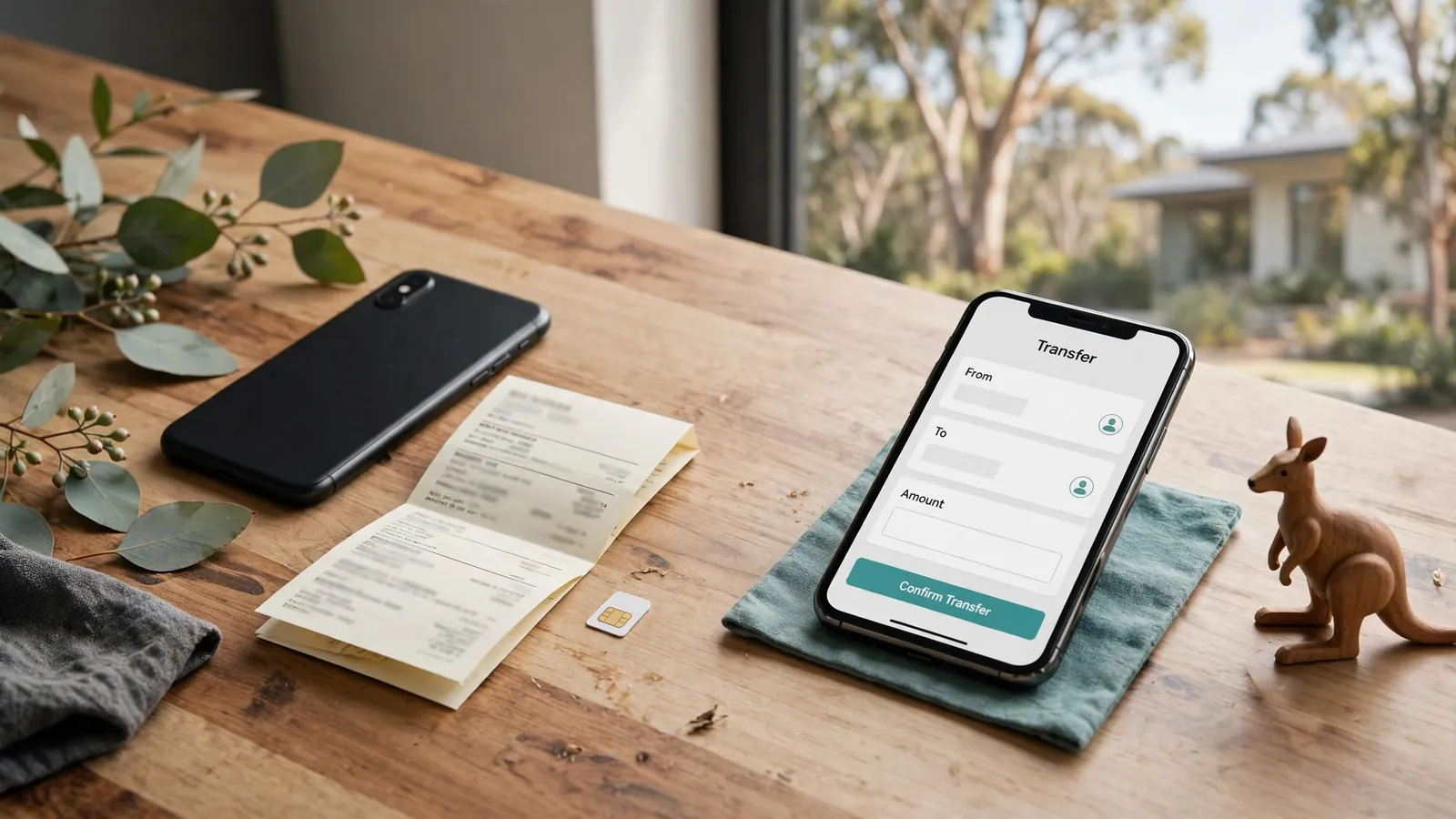
Mobile Casino Payments: Phone-Bill Charges or Banking-App Transfers?
“Pay by phone” can describe two different payment arrangements. A carrier-billed payment is added to a mobile account and later appears on a phone bill or is deducted from prepaid credit. PayID works differently: the payment is made from a bank account through a banking app. Treating these as interchangeable can obscure who receives the money, where it is taken from and how the transaction is authorised.
With a genuine phone-bill charge, the mobile carrier is part of the payment route. The charge is associated with the phone account rather than initiated as a bank transfer. This is distinct from using a phone as the device for an online payment: an app or website can be opened on a mobile handset while the money still comes from a bank account, card or another payment source. The device used does not, by itself, identify the payment method.
For PayID, the casino deposit flow involves choosing PayID, entering a deposit amount and confirming the transfer in the player’s banking app. The phone may therefore be involved at two levels: it can be the device used to access the casino account and the banking app, and it can also be an identifier associated with a PayID. Neither fact turns the transaction into a charge on a mobile bill. The funds are sent from the bank account through the banking app.
This distinction matters when wording such as “mobile casino payment” or “online casino pay by phone” is used. Such phrases do not specify whether payment is carrier billing or a bank-initiated transfer. A description of a casino site as mobile-compatible says something about access from a phone, not necessarily about the source of funds. Likewise, a reference to a mobile number in a payment process does not, on its own, mean the amount will be collected by a phone provider.

The difference is also visible in the point at which the payment is approved. A phone-bill arrangement would be associated with the customer’s mobile service account. A PayID payment is confirmed inside the player’s bank app. A page that describes selection of PayID and bank-app confirmation is describing a banking transfer, even if the whole process takes place on a smartphone. The wording “pay by phone” is therefore too broad to identify the route without further detail.
The distinction applies equally to searches for mobile slots or pokies payable through a phone account. A game being accessible on a mobile device does not show that its cost, deposit or play balance is charged to a phone bill. Nor does a banking-app transfer become carrier billing merely because it is initiated on a mobile phone. These are separate questions: whether a service can be opened on a phone, and whether a payment is charged by a mobile provider.
In Australia, there is an additional legal context. The Interactive Gambling Act 2001 prohibits operators from providing real-money online casino-style services to people located in the country, including services involving pokies and table games. A payment label does not alter the nature of the underlying service. Calling a transaction a phone-bill payment, a mobile deposit or a banking-app transfer does not change that legal distinction.
Accordingly, “pay by phone bill” should be read narrowly as a claim about billing through a mobile carrier, not as a synonym for any payment made using a phone. PayID is a bank-account payment confirmed through a banking app. Mobile access, a mobile-number identifier and a charge on a phone bill are different things, and clear descriptions should not conflate them.
How PayID Deposits Are Credited to a Casino Account
A PayID deposit involves two linked steps: a payment instruction on the gambling service and confirmation through the player’s banking app. The casino account is credited only after the payment can be matched to the relevant account. That matching process matters because a transfer may reach its destination without being automatically associated with the correct player.
PayID Deposit Process
-
1
Initial Instruction
Select PayID on the payment interface and enter the intended deposit amount.
-
2
Bank App Confirmation
Open the banking app to authorise the transfer, ensuring the amount matches the casino interface.
-
3
Reference Entry
Include the required player ID or username in the payment reference field to enable automatic matching.
-
4
Final Verification
Check the recipient name and reference against the instructions before confirming the transfer.
Where a payment interface offers PayID, the displayed instructions set out how to initiate the transfer. The stated process is to select PayID, enter a deposit amount and confirm the payment in the banking app. The amount entered on the payment screen should correspond to the amount confirmed in the app. The banking app is where the transfer is authorised; entering an amount in the casino interface alone does not complete it.
The payment reference is a separate part of the process from the amount and recipient details. Some casino payment instructions require a player ID or username in that reference so the incoming transfer can be matched automatically. The reference is therefore not merely a note describing the payment. If the required identifier is absent or incorrect, the funds may remain pending rather than appearing as account credit. Support staff may then need to process the payment manually.
A reliable sequence, when a service lawfully offers such a payment option, is to review its displayed PayID instructions, select PayID, enter the intended amount, and check the requested reference before confirming the transfer in the banking app. The recipient name and reference should be checked against the instructions before payment is authorised. A different recipient or an incomplete reference can make it harder to establish where a transfer belongs. If a unique reference is specified, it should be entered exactly as directed and checked again before confirmation.

The account balance may not update simply because the banking app reports that a transfer has been sent. Automatic crediting depends on the payment being identifiable as belonging to the relevant player. When the payment reference contains the required player ID or username, the system may be able to associate the transfer with that account. If the identifier is missing, the deposit may remain pending and require manual support processing. Repeating the transfer before resolving an uncredited payment could create a second transaction without addressing the original matching problem.
A pending status should therefore be treated differently from a completed account credit. The banking record can establish that a payment was initiated, but the account balance indicates whether it has been credited for use. If those records do not align, the relevant payment details and reference are the information needed to explain the discrepancy to support. This is an administrative distinction: sending money and recording it against a player account are related, but they are not the same event.
Do
- Review the displayed PayID instructions carefully
- Enter the unique reference exactly as directed
- Verify the recipient name before authorising
- Contact support for pending payments
Don't
- Infer reference formats from previous transactions
- Change the reference to a more familiar name
- Repeat transfers before resolving uncredited payments
- Assume a banking app report equals account credit
The process also depends on following the instructions attached to the particular payment screen. A reference format or recipient detail should not be inferred from a previous transaction or from another service’s instructions. Where the requested identifier is unclear, confirmation should be sought before the transfer is made. Changing a reference to something shorter or more familiar may prevent automatic matching if the system expects a specific player ID or username.
These mechanics do not make every service offering a deposit screen lawful in Australia. The Interactive Gambling Act 2001 makes it illegal for operators to provide real-money online casino games, including slots, poker and table games, to people physically located in Australia. A PayID button or set of transfer instructions does not alter that legal position. Payment instructions should not be treated as evidence that an operator may lawfully provide casino gambling to Australian residents.
In practical terms, the key crediting issue is accurate identification of the transfer: the requested recipient must be checked, and any required player ID or username must appear in the payment reference. Without that information, a transfer can require manual handling rather than automatic account credit.
What PayID Means for Casino Payments in Australia
Casinos listed by licence
Choosing a pay-by-phone casino in Australia means checking which payment details are actually available, including deposit minimums and payout options. Use these verdicts as a concise reference when considering the listed operators.
-
Roby Casino
- License
- Curacao eGaming (Roby Games Ltd)
Roby Casino is listed with a Curaçao eGaming licence held by Roby Games Ltd.
-
Neospin
- License
- Curacao Gaming Control Board OGL/2023/176/0095 (Hollycorn N.V.)
Neospin holds a Curaçao Gaming Control Board licence, OGL/2023/176/0095, through Hollycorn N.V.
-
WinSpirit Casino
- License
- Curacao eGaming OGL/2024/923/0383 (Antillephone N.V.)
- Min. deposit
- A$30
WinSpirit Casino is listed with a Curaçao eGaming licence, OGL/2024/923/0383, issued to Antillephone N.V. Its minimum deposit is A$30.
-
Vegaz Casino
- License
- Curacao OGL/2024/1335/0780
- Min. deposit
- EUR 20
Vegaz Casino is listed with Curaçao licence OGL/2024/1335/0780. Its minimum deposit is EUR 20.
-
House of Pokies
- License
- international iGaming licence – jurisdiction not named in the source
- Payout speed
- PayID 1-24 hours
- Min. deposit
- A$30 (PayID from A$10)
House of Pokies lists an international iGaming licence, though the jurisdiction is not named in the source. PayID payouts are stated as taking 1–24 hours; the minimum deposit is A$30, or A$10 when using PayID.
-
DragonSlots Casino
- License
- Curacao Gaming Authority (Jumpman Gaming Ltd)
DragonSlots Casino is listed with a Curaçao Gaming Authority licence held by Jumpman Gaming Ltd.
-
Ricky Casino
- Payout speed
- crypto under 1 hour, PayID 1-3 business days
- Min. deposit
- A$20 (A$30 to qualify for the bonus)
Ricky Casino lists crypto payouts in under an hour and PayID payouts in 1–3 business days. The minimum deposit is A$20, rising to A$30 to qualify for the bonus.
-
Wild Tokyo
- License
- Curacao
- Payout speed
- crypto 30-60 minutes, fiat 1-5 days
- Min. deposit
- A$10
Wild Tokyo lists a Curaçao licence, with crypto payouts stated at 30–60 minutes and fiat payouts at 1–5 days. Its minimum deposit is A$10.
-
Rollero Casino
- License
- Curacao Gaming Control Board OGL/2023/176/0095 (Hollycorn N.V.)
Rollero Casino holds a Curaçao Gaming Control Board licence, OGL/2023/176/0095, through Hollycorn N.V.
-
Lucky Dreams
- License
- Curacao
- Min. deposit
- A$20 (POLi)
Lucky Dreams lists a Curaçao licence and a minimum deposit of A$20 when using POLi.
PayID is a payment service that operates through Australia’s New Payments Platform (NPP). It lets a person send or receive money using an identifier linked to an account, such as a mobile number or email address, rather than entering bank-account details for every transfer. The NPP is the underlying payment infrastructure; PayID is one way of addressing a payment on that network.
The distinction matters when a payment method is described as available for casino use. PayID itself is a bank-based transfer service, not a casino product. Its role is to move a payment between accounts through the NPP. Whether a particular service accepts PayID is a separate question from how the network works, and the existence of PayID does not establish that any specific casino accepts it.
NPP payments settle in real time. In practical terms, this describes the payment rail’s settlement function, not every step that may occur around a transaction. A receiving service may have its own processes for recognising or recording an incoming payment. Consequently, real-time settlement should not be read as a guarantee that a casino account is updated at the same moment, or that a withdrawal request is processed instantly.

The word “PayID” can also be misunderstood as a reference to paying through a phone. A mobile number may serve as a PayID identifier, but that does not make the transaction a charge added to a mobile telephone bill. The payment remains an account-to-account transfer initiated through a banking service. This distinction concerns the payment mechanism; it does not establish which forms of payment a particular gambling operator offers.
For Australian readers, the legal setting is central to any discussion of real-money online casino payments. The Interactive Gambling Act 2001 prohibits operators from providing real-money online casino games, including pokies and table games, to people physically located in Australia. A payment network’s technical capacity to settle transfers does not change that restriction or make a prohibited service lawful. PayID should therefore be understood as payment infrastructure, not as evidence of an authorised route to online casino gambling.
This also limits what can be inferred from broad descriptions such as “PayID casinos” or “casino payments by PayID.” Such wording may refer to a claimed payment option, but it does not establish that the service is available, that a transfer will be accepted, or that an operator may lawfully provide real-money casino games to people in Australia. The payment method and the legal status of the underlying service are separate matters.
In short, PayID identifies payments through the NPP using a recognised identifier, and NPP transactions settle in real time. Those facts describe the network and its payment function. They do not amount to a ranking of casinos, confirmation of operator acceptance, or evidence that real-money online casino services may be provided to people in Australia.
Assessing Casino Payment Claims Without a Verified Operator List
A claim that a casino accepts payment by phone is not enough to establish what the payment involves or whether the service is available to people in Australia. The phrase may refer to different arrangements, and a promotional label does not verify the payment route, the recipient, or the terms under which a transaction is handled. Rankings of the best phone-payment casinos would therefore imply a level of comparison that cannot be supported without reliable, current operator information.

A useful assessment separates three questions: what payment method is being described, who receives the money, and whether the claimed service is lawful for the intended location. Payment labels should be matched to the actual steps shown at checkout. Where a service involves a banking-app transfer, the payment record and recipient details should correspond to that arrangement; a charge to a mobile account would be a different mechanism. The two should not be treated as interchangeable merely because both involve a phone.
Payment instructions also need to be specific enough to verify. The recipient name should be checked before a transfer is confirmed, and any required player ID or username should be entered accurately in the reference field. A missing or incorrect reference can prevent automatic crediting and leave a payment awaiting manual processing. These details help establish how a transaction is meant to work; they do not establish that the casino itself is lawful or reliable.
A further distinction is necessary between evidence that a payment channel exists and evidence that a particular casino accepts it. A general description of a payment service, or a statement that phone-based payments are possible, does not prove that the method appears in an operator’s cashier or that deposits are credited as claimed. Claims should be treated cautiously when they lack clear payment instructions or conflict with the information presented during the transaction. Even consistent payment details cannot establish a sound payout record.
In Australia, the legal question is decisive. The Interactive Gambling Act 2001 prohibits operators from providing real-money online casino games, including pokies, to people physically located in Australia. An offshore licence does not make such a service lawful to provide to Australian customers. A payment method, a polished cashier, or a ranking label cannot alter that position. Accordingly, promotional claims describing the best casinos that accept phone payments should not be read as evidence that those services are lawful or suitable for use in Australia.
The limits of a payment claim should also be kept separate from claims about games or promotions. Naming a software provider or describing a deposit offer does not verify the payment service, the operator, or the legality of access in Australia. Those are distinct propositions and require distinct evidence. A claim about one cannot be used as proof of another.
Legal Prohibition
The Interactive Gambling Act 2001 prohibits operators from providing real-money online casino games to people physically located in Australia.
The cautious conclusion is narrow: payment wording can be assessed for clarity and consistency, but it cannot substantiate a list of recommended casinos for Australians. Nor does evidence that a payment rail can process a transfer establish that an online casino may legally offer real-money play in this market.
Bonus Terms and the Limits of the Available Evidence
A claim that a phone-payment casino offers “no wagering” bonuses cannot be assessed from the label alone. The phrase may suggest that winnings can be withdrawn without first meeting a wagering requirement, but it does not establish the offer’s full conditions, who qualifies, or whether the offer is available at all. The same applies to claims of a no-deposit bonus: the name does not prove that an offer exists or that it is connected to a particular payment method.
Promotional wording is not a substitute for published terms. Before an offer could be evaluated, its conditions would need to be clear, including any wagering requirements, maximum bet limits, game weighting, time limits and maximum cash-out conditions. These details can determine whether bonus funds or resulting winnings can be used or withdrawn, and whether particular games count towards a requirement. Without the terms, a “no wagering” description should not be treated as evidence that all play is unrestricted or that winnings are immediately withdrawable.
Payment language also needs careful interpretation. A reference to paying by phone does not establish that a bonus is funded through a charge to a mobile bill, nor that a banking-app transfer qualifies. An offer’s stated payment eligibility would need to be distinguished from its broader promotional headline. No conclusion about a specific phone-payment bonus follows from the wording of a search result or a short advertisement.

There is a more fundamental limit in Australia. Under the Interactive Gambling Act 2001, operators are prohibited from providing real-money online casino games, including slots, to people located in Australia; advertising those services to Australian audiences is also prohibited. A promotional claim directed at Australians therefore cannot be treated as evidence of a lawful local casino offer. This is separate from whether a promotion’s terms are clear: detailed terms would not alter the legal restriction on providing the underlying service.
Accordingly, descriptions such as “no wagering” or “no deposit” should not be presented as confirmed benefits for Australian players. A responsible assessment would require the complete terms and a clear account of the offer’s eligibility and restrictions, while also recognising the legal position on real-money online casinos in Australia. Where those elements cannot be established, the claim remains unsubstantiated rather than a reliable basis for a payment or promotional decision.
BetStop, Phone-Bill Claims and Responsible Verification
A claim that a casino accepts charges to a phone bill does not establish whether it is on or off BetStop. The two claims concern different things: one describes a proposed payment route, while the other makes a statement about BetStop status. Neither logically confirms the other. The same applies to claims about phone-bill deposits for real-money play, whether a service uses Boku or another payment provider, or whether it offers bingo or pokies.
A payment label is not evidence of an operator’s legal status or payout record. Nor does describing an offer as a no-deposit option establish that it is lawful, available or genuine. Promotional wording cannot substitute for independently checkable information about who provides a service and what it actually offers.

Australia’s legal position is material to these claims. Under the Interactive Gambling Act 2001, providing real-money online casino games—including slots, poker and table games—to people physically located in Australia is illegal for operators. A phone-bill payment option, if claimed, would not change that position. BetStop status should therefore not be treated as a signal that a real-money online casino service is lawful for use in Australia.
Responsible verification separates the questions rather than treating them as a single endorsement. A statement about BetStop should be supported by information that specifically establishes that status; a payment claim needs evidence about the payment arrangement; and claims about licensing and payouts need to be assessed separately. An offshore licence does not make the provision of real-money online casino games to people in Australia lawful under the Australian rule.
These distinctions matter when a page describes a “pay by phone bill casino not on BetStop” or makes a similar claim. The wording may sound like a combined assurance, but it does not prove the payment method, BetStop status, legal standing or payment reliability. Each is a separate proposition, and none should be inferred from the others.
For Australian readers, the relevant safeguard is not to rely on a phone-bill label or a BetStop claim as evidence that an online casino is lawful. The legal restriction applies to the service being provided, not to the method used to fund it. Claims of phone-bill casinos being “not on BetStop” should therefore be understood as unverified assertions unless supported by specific, credible evidence—and even then, such evidence would not override the Interactive Gambling Act.
Which Casino Games Can Be Paid for by Phone?
A payment method does not, by itself, identify which games are available. References to paying for pokies or other casino games by phone can describe how money is transferred, but they do not establish that a particular game, title or operator is available to people in Australia.
The legal position is material to any such claim. Under the Interactive Gambling Act 2001, operators must not provide real-money online casino games to people physically located in Australia. The prohibition covers casino-style games such as pokies, blackjack, roulette and poker. A page presenting one of these as an Australian real-money option paid for by phone would therefore need to be assessed against that restriction; a payment label does not change the nature of the service.
The same distinction applies to claims about a catalogue of games. A list of titles, a game image or a statement that a site accepts phone payments cannot, on its own, verify that the games can lawfully be offered to Australian customers. Nor does the phrase “pay by phone” establish that a phone-bill charge is available. PayID, where used, is initiated through a banking app and is a payment transfer, not a game category or a method for charging a mobile account.
Terms such as “phone-paid slots” can also blur separate claims: that a payment method exists, that a site offers a particular game, and that the service is accessible in Australia. Each requires its own assessment. A promotional description should not be treated as confirmation of all three.
The country named in a casino description matters as well. A product described for another market cannot be assumed to be available to people in Australia, and a game’s presence on an overseas site does not establish that it may be provided here. This is particularly important when claims combine a location, a payment method and a named game as if one confirms the others.
Accordingly, no specific game can be identified as a lawful real-money casino option payable by phone for people in Australia. Game names and payment claims should not be read as evidence that an Australian-facing casino service is permitted.

Online Slots and the Geographic Limits of Payment Claims
A payment claim tied to online pokies needs to be read in its geographic context. A casino’s stated location or the country associated with its licence does not establish that its service is lawful or available to people in Australia. Nor does a payment option advertised for one market demonstrate that the same option applies elsewhere.
For people physically in Australia, the relevant legal boundary is set by the Interactive Gambling Act 2001. The Act prohibits operators from providing real-money online casino services to people in the country, including pokies and other casino-style games. That restriction concerns the service itself; describing it as an overseas site or associating it with a foreign licensing location does not remove the Australian rule.
References to Curaçao-licensed casinos therefore cannot, on their own, establish that a particular operator accepts phone-based payments from Australians. The same applies to claims about German online casinos: a payment arrangement described for Germany cannot be assumed to operate in Australia, and the country name alone does not verify a service’s terms or availability. No specific overseas operator or phone-payment arrangement can be identified from those geographic labels alone.

The phrase “pay by phone” also leaves an important distinction unresolved. It may refer to a charge placed on a mobile account or to a payment initiated through a banking app. A claim about a mobile-compatible site does not, by itself, show that a phone bill can be used to fund play. Nor does the fact that a payment can be made on a mobile device establish that the casino service is available in a particular country.
Consequently, claims about online slots payable by mobile should not be treated as evidence of Australian availability. Geographic scope, the nature of the payment, and the legality of the underlying service are separate questions. For Australians, the legal restriction on operators providing real-money online casino games remains decisive, regardless of the overseas market or licence mentioned in a payment claim.
Credit Cards, Casino Deposits and Withdrawal Methods
A card deposit and a card withdrawal are separate stages of a payment process. A specialist review reports that Visa and Mastercard are widely accepted for deposits in casino settings, but that does not establish that either can be used for every transaction or by any particular operator. Nor does acceptance for a deposit imply that winnings can be returned to the same card.

The same review notes that card withdrawals may take longer than deposits or may not be available, depending on the payment processor. Where a card cannot receive a payout, the operator may use another withdrawal route. A further specialist review reports that operators may require a withdrawal to return through the deposit method when that is possible. These are descriptions of reported practices, not guarantees about an individual service.
This distinction matters when assessing claims about payment by phone credit. A charge placed on a mobile account is not the same as a card transaction, and neither is equivalent to a transfer confirmed through a banking app. References to services such as Boku or to arrangements in Europe or Ireland do not establish that a method is available for Australian casino payments. Card acceptance alone also says nothing about phone-bill billing.
The Australian legal context places a limit on how these payment claims should be interpreted. The Interactive Gambling Act 2001 prohibits operators from providing real-money online casino games, including slots and table games, to people physically located in Australia. Accordingly, payment descriptions from casino reviews should not be treated as evidence that an online casino service may lawfully be offered to Australian residents.
A payment method’s stated availability is also not a substitute for information about withdrawals. Deposit instructions, withdrawal rules and processor limitations can differ, so a claim that a card is accepted should not be read as confirmation of a complete deposit-and-cash-out route. For Australian readers, this distinction is informational: it does not endorse or recommend using an online casino.

Free Spins and Credit Offers: What Can Be Confirmed
Free spins and casino credit are promotional terms, not payment methods. A free-spin offer refers to play credited for use on specified games; a credit offer refers to a promotional balance. Neither description establishes that a phone-bill charge is accepted, that a banking-app payment qualifies, or that an offer can be used to withdraw cash.
In Australia, the legal distinction is decisive. The Interactive Gambling Act 2001 makes it illegal for operators to provide real-money online casino games, including slots, to people physically located in the country. A promotion framed as free spins or casino credit does not change the nature of the underlying service or make it lawful to provide.
Where promotional terms are presented, the material conditions matter more than the headline. These can include wagering requirements, maximum bet limits, game weighting, time limits and maximum cash-out conditions. The wording should establish what games are included, whether the credit is withdrawable, and what restrictions apply before any offer is considered. A label alone cannot answer those questions.
The same caution applies to claims that spins or credit are available after paying by phone. Such wording does not identify whether “phone” means a charge on a mobile bill or a transfer initiated in a banking app. Nor does it prove that a particular offer exists or can be used by someone in Australia.
Accordingly, free-spin and credit language should not be treated as evidence of an available or usable casino promotion. The relevant distinction is between the promotional label, the payment route and the legality of the service being offered.
Do Australian online casinos support PayID withdrawals?
Some casinos offer PayID withdrawals, but PayID availability does not change the fact that Australian law prohibits operators from providing real-money online casino services to people in Australia.
What are the minimum and maximum deposit limits at PayID casinos?
PayID casino deposits commonly start at AUD 10–20, though some accept as little as AUD 5 by bank transfer. PayID transaction limits are set by your bank; most major Australian banks allow AUD 1,000–5,000 per transaction, with daily limits of AUD 10,000–20,000.
What is the minimum PayID deposit?
PayID casino deposits commonly start at AUD 10–20. Some services accept deposits as low as AUD 5 via bank transfer.
How long do PayID deposits take?
PayID deposits typically reach the casino within 3–15 seconds. The casino may take longer to credit the account if the required player ID or username is missing from the payment reference.
Can you withdraw casino winnings using PayID?
Some casinos support PayID withdrawals, which can arrive within minutes to hours after approval. Australian law prohibits operators from providing real-money online casino services to people in Australia.
How long do withdrawals take?
At top-rated PayID casinos, requests from verified accounts are typically reviewed and approved within 2–6 hours. After approval, PayID withdrawals may arrive within minutes to hours, while bank transfers and card withdrawals often take one to five business days.